
What a commercial architect helps with
A commercial architect plans spaces used for business. That can include retail stores, restaurants, offices, clinics, salons, mixed-use spaces, and tenant improvements. They help turn your needs into drawings and a permit-ready set of plans, while keeping local code requirements in mind.
Commercial projects often involve more than design. Accessibility rules, fire and life safety, egress, occupancy limits, zoning, and coordination with engineers may all matter. A licensed architect helps organize those pieces so your project can move through the review process in a professional way.
If you are early in the process, it is normal to have a lot of questions. We help you find a licensed architect who has experience with commercial projects similar to yours.
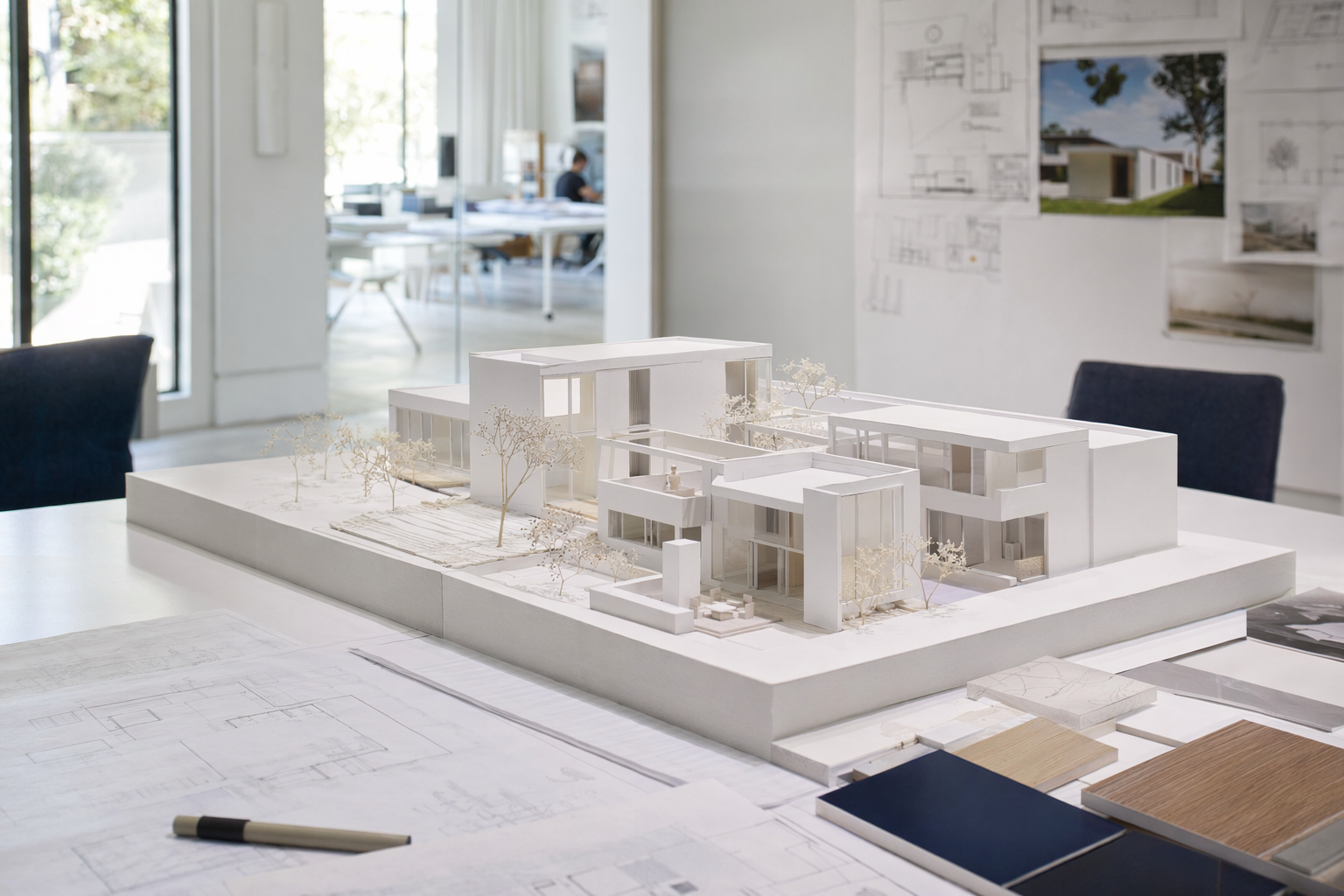
When to bring in an architect
It is smart to speak with a licensed architect early, especially before you commit to a lease, buy a property, or finalize a layout. For commercial spaces, small decisions can affect code compliance, construction cost, and whether the space can support your business plan.
An architect can help you think through questions like how many customers the space can hold, where restrooms may be needed, how accessible entrances and routes should work, and what kind of drawings may be required for permits. They may also help you understand whether the space is likely to need structural, mechanical, electrical, or plumbing coordination.
If you are comparing spaces, early design input can save time later. We connect you with architects who can review your goals and help you move forward with more clarity.
Common commercial project types
Commercial architecture covers many project types, and the right experience matters. A restaurant build-out is different from an office refresh. A retail tenant improvement is different from a medical or wellness space.
Typical projects include:
- Storefronts and retail tenant improvements
- Restaurants, cafés, and food service spaces
- Offices and coworking spaces
- Salons, studios, and personal service businesses
- Clinics, small medical offices, and wellness spaces
- Mixed-use or shell space build-outs
If your project involves changing use, adding seats, changing occupancy, or reworking the layout, a licensed architect can help you understand what the jurisdiction may ask for and what should be coordinated before permit submittal.
How the process usually works
The process often starts with a conversation about your goals, budget, location, and timeline. The architect may then review your site, your lease or property conditions, and any existing plans or measurements. From there, they may develop schematic design, which is an early layout phase that shows how the space could function.
After that, the project may move into design development and construction drawings. Those are more detailed documents used for pricing, coordination, and permits. For commercial work, this stage can involve consultants such as structural, mechanical, electrical, plumbing, or fire protection professionals depending on the project.
Every city and state has different rules, so the exact steps vary. A licensed architect helps you understand the local process and what information is typically needed.
What commercial architects may charge
Fees for commercial architecture vary based on project size, complexity, location, and scope. Some firms charge a fixed fee, some charge hourly, and some use a percentage of construction cost. For planning purposes, commercial architecture fees are often discussed in broad terms, but there is no standard price that fits every project.
For a simple tenant improvement, fees may be lower than for a restaurant, clinic, or project with multiple code issues and consultants. If you want to learn more about common fee structures, see our guide to architect fees explained.
Because we are a free matching service, the cost to you does not go up when we help you find an architect.
How Studio Northing helps
We are not an architecture firm, and we do not provide design, engineering, or legal advice. Our role is simpler: we help you find a licensed architect and connect you with someone who fits your type of project.
You tell us what you are planning, where the project is located, and what kind of help you need. Then we match you with a licensed architect who may be a good fit for your commercial project. You can use that conversation to decide whether to move forward.
If you want to explore more project types, visit our services page, browse our guides, or view projects to better understand what architects can help with.
In plain English
We help you find a licensed commercial architect for your business project, and we explain the process in simple terms without promising approvals.
Always hire a licensed architect, and verify the state license yourself before work starts. General information, not architectural, engineering, or legal advice.