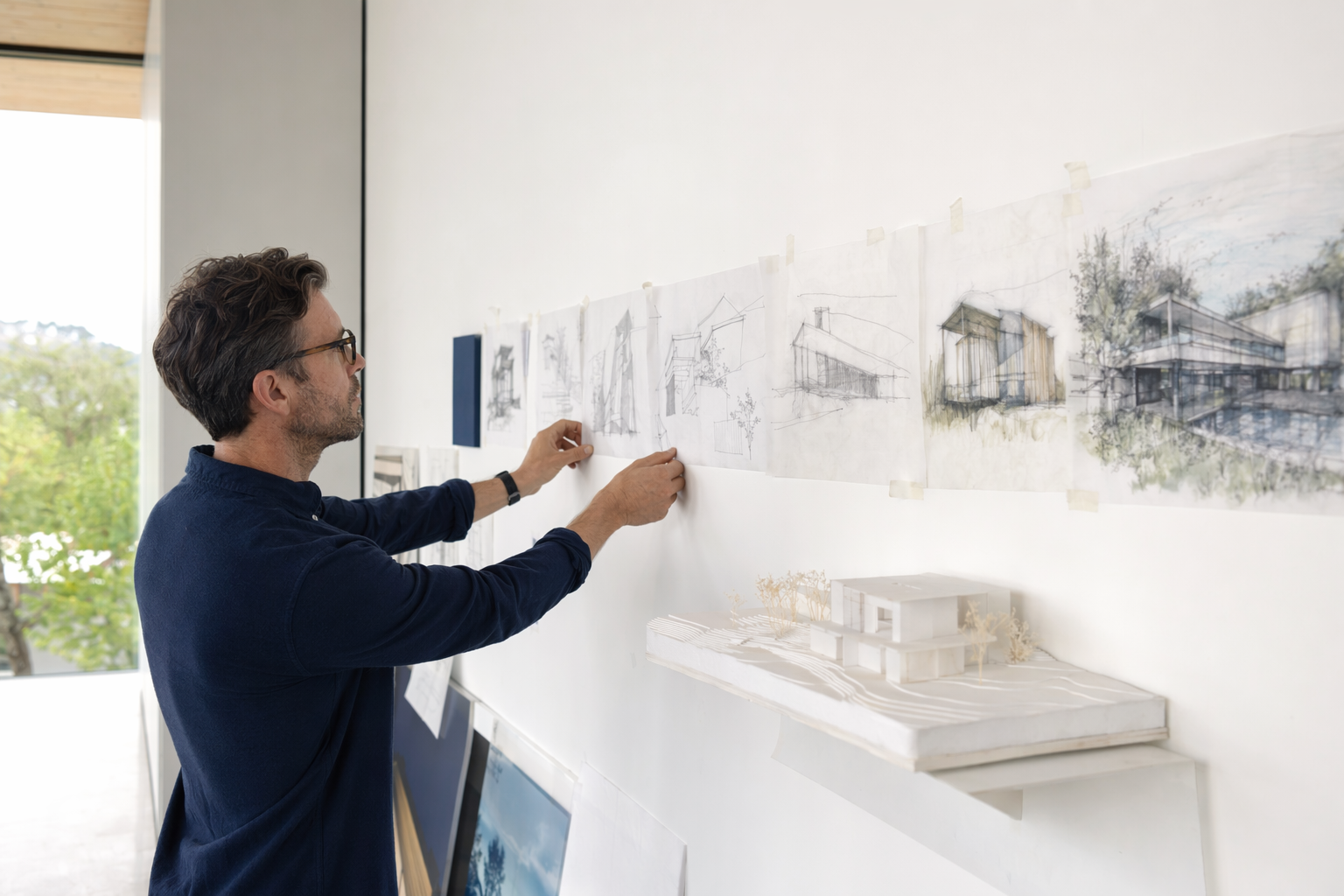
What the architectural process usually includes
Most projects move through a few common phases: concept, schematic design, design development, construction documents, permitting, and construction support. The names can change a little by architect or city, but the general sequence is similar.
Each phase answers a different question. First: what are you trying to build? Then: what does it look like and how does it work? After that: what details are needed for pricing, permits, and construction?
Not every project needs every step in the same way. A small renovation may move faster than a custom home or commercial project. Rules also vary by state, city, and project type.

1. Concept and initial planning
This is the early idea stage. You share your goals, budget range, timeline, site information, and any must-haves. The architect may ask about your family, business needs, square footage, zoning limits, and how you want the space to feel and function.
At this point, the focus is big-picture. The architect is usually exploring what might be possible, not finalizing every wall, window, or material. You may see rough sketches, massing studies, or simple space plans.
This stage helps you clarify priorities before you spend time and money on detailed drawings. It is also when a good architect can flag common issues such as setbacks, lot coverage, or whether the project may need special approvals.
2. Schematic design and design development
Schematic design turns the early idea into a clearer layout. This is where room sizes, circulation, and overall shape start to take form. You may review floor plans, exterior concepts, and basic options for how the project could work.
Design development goes deeper. The architect refines the chosen direction and coordinates important systems and details, such as structure, plumbing, HVAC, electrical, and other building requirements. In plain language, this is where the design becomes more buildable and more specific.
You may also discuss materials, finishes, energy goals, accessibility, and how the building will meet local code requirements. Changes are still possible, but later changes often take more time and can affect cost.
3. Construction documents and permit drawings
Construction documents are the detailed drawings and notes used to explain the project to contractors and permit reviewers. These drawings often include floor plans, elevations, sections, details, schedules, and specifications.
For many projects, this is the phase people mean when they say “permit set” or “permit-ready drawings.” A permit set is the package submitted to the city or county for review. Some projects also need separate engineering drawings.
This is not the same as approval. Local officials may ask for corrections, more information, or additional documents. Requirements can change based on the project, the jurisdiction, and whether the property is in a special district.
4. Permitting, bidding, and contractor pricing
Once drawings are ready, they are often used for permit submission and for getting bids from contractors. The permit process can take time, and the review path depends on the local office and project type.
If you are comparing contractor prices, clearer drawings usually help contractors give more consistent numbers. If the documents are vague, prices can vary widely because builders have to make assumptions.
Some architects also help answer bidder questions or revise drawings after comments come in. That can make it easier to keep the project moving, but it does not guarantee a faster review or a permit approval.
5. Construction support
After work starts, many architects provide construction support or construction administration. This usually means answering questions, reviewing shop drawings or product data, and helping interpret the design intent when issues come up on site.
Construction is where real-world conditions sometimes differ from the drawings. Hidden framing, site conditions, material substitutions, and contractor questions can all create changes. A licensed architect can help clarify the design, but the contractor is still responsible for building the project and the permit office still controls inspections and approvals.
If you want help understanding what services you need, see our services page. If you are early in the process and want someone to explain your next step, you can get matched with a licensed architect.
How long the process takes and what affects cost
There is no standard timeline that fits every project. A simple interior renovation may move in a few months, while a custom home or commercial project can take much longer because of design decisions, engineering, permit review, and construction complexity.
Cost is also project-specific. Architects may charge as a flat fee, hourly, or as a percentage of construction cost, depending on the scope and the market. More complex projects usually require more time and coordination. If you want a general overview of fee structures, read architect fees explained.
The best way to keep a project on track is to define goals early, make decisions in a timely way, and work with a licensed architect who has experience with your project type and local rules.
In plain English
The architectural process is a series of steps that turns an idea into permit drawings and construction support, and we help you find a licensed architect to guide it.
Always hire a licensed architect, and verify the state license yourself before work starts. General information, not architectural, engineering, or legal advice.