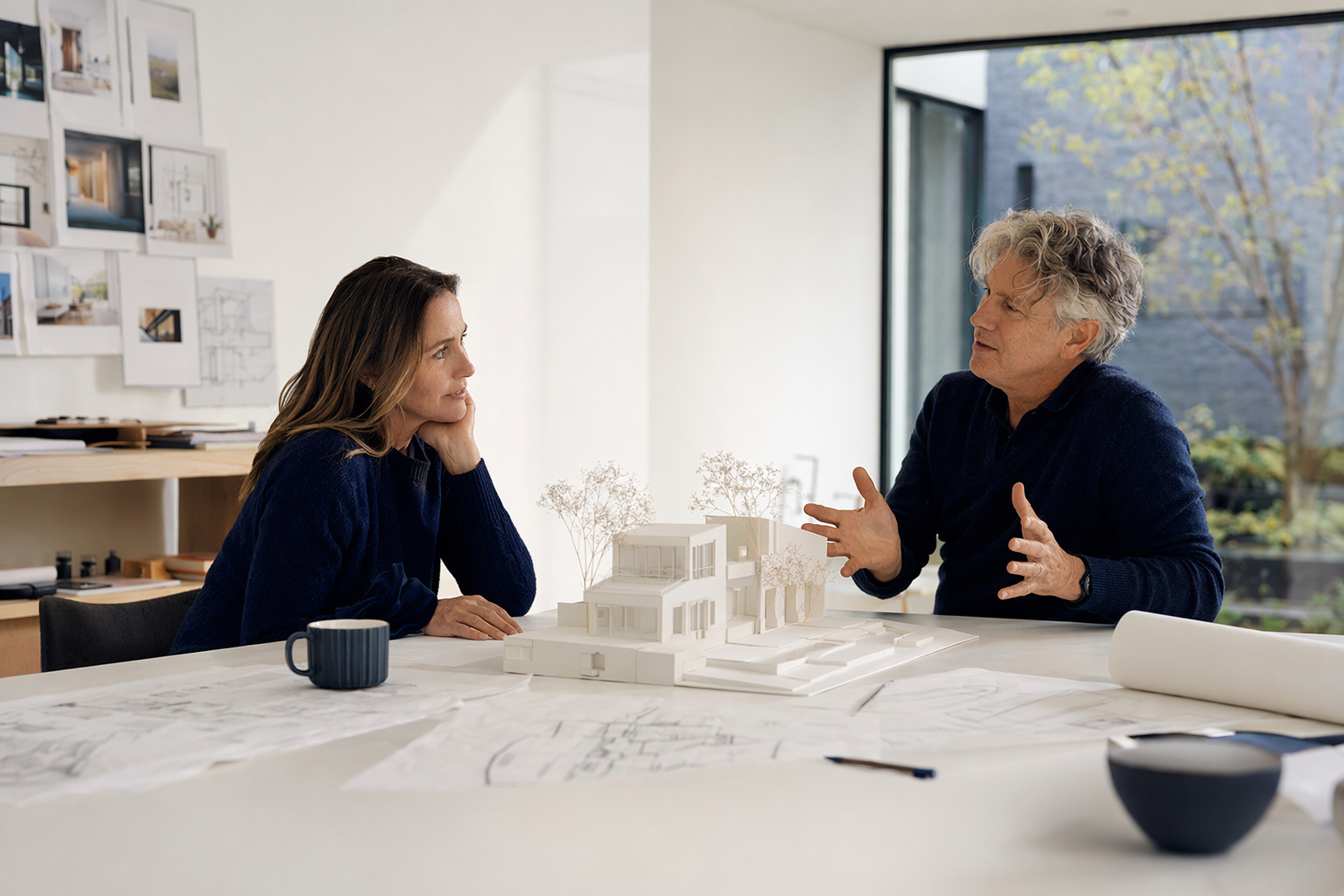
1) Start with the right conversation (before you pick anyone)
Before you meet an architect, collect a few basics about your project. Write down your goals, timeline, budget range, and must-haves (rooms, layout, accessibility needs, parking, storage, etc.).
If you have questions about the process or costs, start there—don’t wait until drawings. You can also check your city or county website for common permit requirements. Rules vary by state and city.
If you want help finding a licensed architect, we help you find one for custom homes, additions, renovations, ADUs, and commercial design—along with permit-ready drawing support. Studio Northing is free, and we do not design or stamp plans ourselves.

2) What to expect in each project stage (in plain terms)
Most architect-led projects follow a similar flow, even though names can vary.
In the beginning, you’ll typically move through concept work, then more detailed drawings. Architects often explain what you’re approving at each step—because approval drives next steps and costs.
Here are common stage names and what they usually mean: schematic design (big-picture layout and ideas), design development (more detail and materials), and construction documents (permit-ready drawings and the set builders use). Some projects also include revisions after plan review comments.
If you’re deciding between scopes or want to compare what’s included, review services and ask your architect to spell out deliverables in writing.
3) How to communicate with your architect effectively
Use clear, repeatable information. When you describe your needs, mention “why” when you can. For example: “We need a first-floor bedroom for aging-in-place” is more helpful than only “We need a bedroom.”
Bring reference material. Photos, sketches, Pinterest-style images, or product links can speed up design decisions. If you don’t like a style, say that too. Sometimes “negative examples” save weeks.
Ask for meeting notes. After each meeting, request a short summary: what you agreed to, what changed, and what your next decision is. This is one of the simplest ways to keep momentum.
If English is not your first language, ask early how you’ll handle communication—translation support, written summaries, or whether you can review drawings with a walkthrough. Good architects adapt to their clients’ needs.
4) Keep the project on track: decisions, timelines, and “scope creep”
Projects usually slow down for one of three reasons: unclear decisions, late changes, or missing information (surveys, site details, or contractor input).
To reduce delays, set a decision rhythm. For example: review options within a set window (like 3–5 days), then confirm yes/no. If you need more time, tell your architect immediately.
Be careful with scope creep. A small change early can become expensive later if it affects structure, plumbing (what’s behind the walls), electrical, or the permit drawings. When you request a change, ask: “What impact will this have on schedule and cost?”
If you want a fee framework to help you plan, read architect fees explained. Typical fee structures can vary, so it’s best to understand how your architect charges before major work starts.
5) Typical meetings and what you should bring
A first meeting is usually about fit and feasibility: your goals, site constraints, budget range, and timeline. Bring any documents you have—property details, photos of the space, prior plans, and your list of questions.
Later meetings often include reviewing options. Bring your notes, your “top priorities,” and examples of what you like or dislike. If you’re comparing layouts or façade options, ask your architect to point out tradeoffs: daylight vs. privacy, open plan vs. sound control, or new windows vs. permit complexity.
Before permit submissions, expect a more formal review of the drawing set. Ask: what is included, what is not, and what will be needed from you (signatures, survey data, HOA information, or utility details).
Finally, during construction document updates and plan review cycles, you’ll review responses to comments. Staying organized—tracking what changed and why—helps keep builders and inspectors aligned.
6) Questions to ask at every step (copy/paste list)
Bring a short checklist to your meetings. You’ll get faster answers and fewer surprises.
Ask about deliverables: “What will I receive at each stage?” and “Will these drawings be permit-ready?”
Ask about process: “What happens if the city sends comments?” and “How are revisions handled?”
Ask about approvals: “What do I need to sign or confirm before you move forward?” and “How do we document decisions?”
Ask about coordination: “How will you coordinate with engineers if required (structural, civil, or MEP)?” MEP refers to Mechanical, Electrical, and Plumbing—specialty systems that often require additional design input.
In plain English
Learn how to clearly communicate with your licensed architect, understand what each project meeting is for, and keep decisions organized from first ideas to permit-ready drawings and final inspection—without guarantees.
Always hire a licensed architect, and verify the state license yourself before work starts. General information, not architectural, engineering, or legal advice.