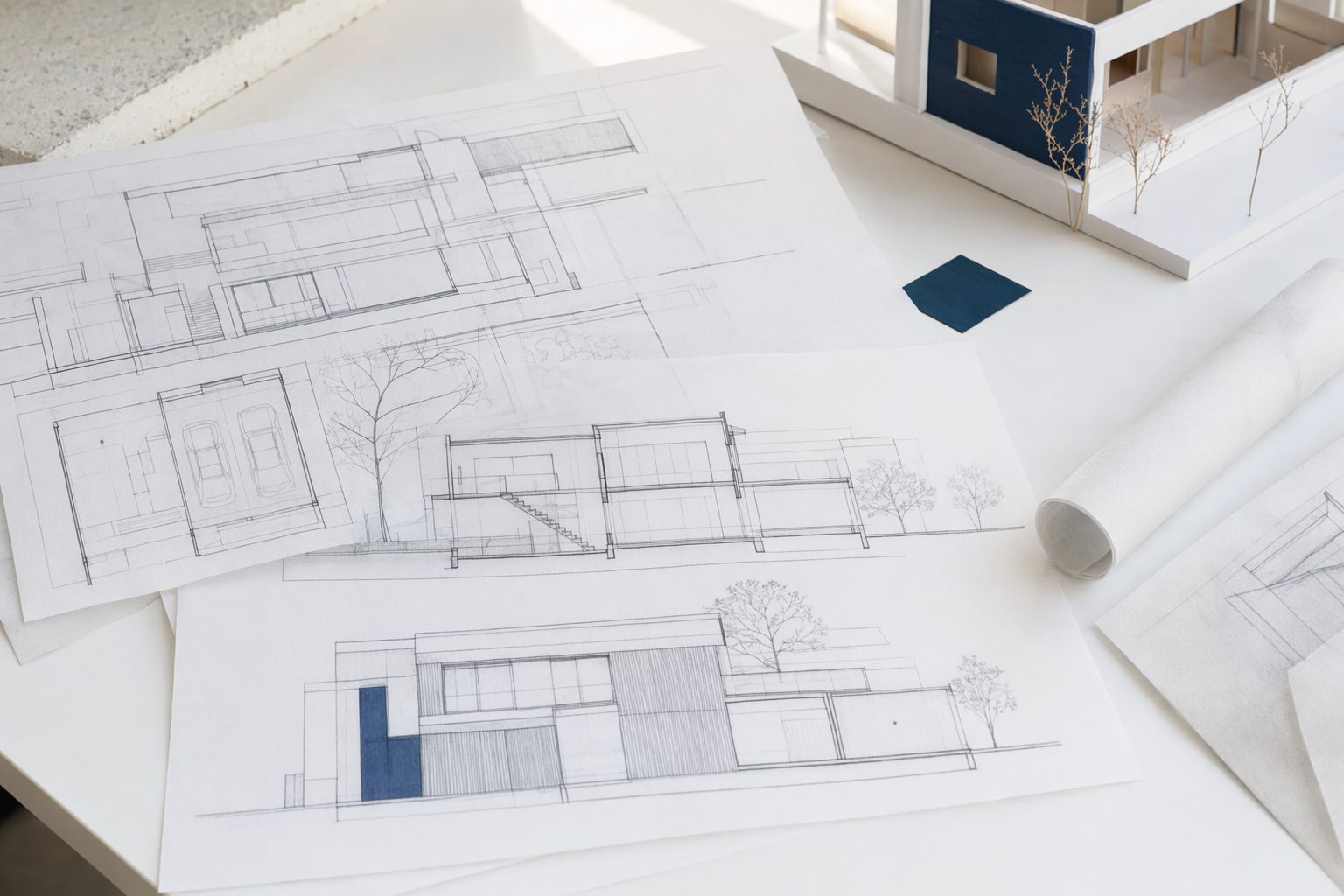
Quick answer: architect vs. draftsman
Many projects can start with drawings, but not all projects need a licensed architect. In general, an architect is most helpful when the project is complex, must meet higher design/permit requirements, or needs professional responsibility for code-compliance.
A draftsman can be useful for basic layout drawings, but licensing, scope, and what the city will accept vary by location. Some states allow certain professionals to prepare permit-ready drawings; others require an architect for particular project types or where professional engineering is involved.
Because rules vary by city and state, the safest approach is to confirm your local requirements early—before you spend money on the wrong type of help.

When you usually need an architect
Consider an architect if your project involves any of the items below. An architect can help coordinate the design, prepare permit-ready drawing sets (when required), and structure the work so it’s easier to review and build.
Common “architect-style” projects include custom homes, additions that change structure or footprint, major renovations, ADUs where design and code details matter, and commercial design.
Also, architects are a strong fit when you want someone trained to think about the whole building: site constraints, layout, light and ventilation, accessibility, and how the design will work with structural and building systems.
When a draftsman may be enough
A draftsman may be appropriate for smaller, more straightforward drawing needs—especially if your local jurisdiction allows them to produce permit-ready drawings for your specific project type.
Examples that sometimes fall into the “draftsman” category include certain minor remodels that don’t change the structure, some interior changes, or re-drawing existing plans for clarification—depending on what your city requires.
Even if a draftsman is permitted to draft drawings, you should still ask who is responsible for code requirements, and whether you will also need licensed engineering for structural or MEP work (MEP means mechanical, electrical, and plumbing).
Key decision factors (what you should ask yourself)
Use these factors to decide which professional is the better match for your situation. The goal is not “more credentials,” but the right level of responsibility for the permit and the construction.
First, check your local rules: some projects trigger architect requirements, others do not. Second, look at complexity: changes to structural elements, setbacks, site grading, accessibility, fire/life-safety, or mixed-use plans often need an architect’s training and coordination.
Third, think about the outcome you need: schematic design (concept ideas), permit drawings, and construction documents are different steps. A draftsman may do one, but the city may need a licensed architect depending on your project and location.
How to get matched with a licensed architect (free)
Studio Northing is a FREE service that helps you understand how to hire a licensed architect and get matched with one for your project. We do not design or stamp anything—we help you find the right licensed professional.
If you’re unsure whether you need an architect or a draftsman, we can connect you with a licensed architect who can tell you what’s typically required in your area and what drawing sets you may need. For a next step, visit get matched and share basic details about your project.
You can also browse our planning information in guides to learn common permit terms and project phases.
Avoid common mistakes
One of the biggest risks is paying for drawings that the city won’t accept. Before hiring, confirm what your jurisdiction requires for permit submissions and who will take responsibility for the drawings.
Another common issue is underestimating engineering. Even when architectural work covers layout and design, you may still need separate licensed engineering for structure or MEP systems. Ask upfront who provides what, and how it will be coordinated.
Finally, watch for “one-size-fits-all” packages. Your site conditions (like setbacks, easements, or slope) and your project scope can change what’s required.
In plain English
An architect is usually needed for complex projects and permit responsibilities, while a draftsman may be enough for simpler cases—rules vary, so verify locally and use our free matching help to connect with a licensed architect.
Always hire a licensed architect, and verify the state license yourself before work starts. General information, not architectural, engineering, or legal advice.