What construction documents usually include
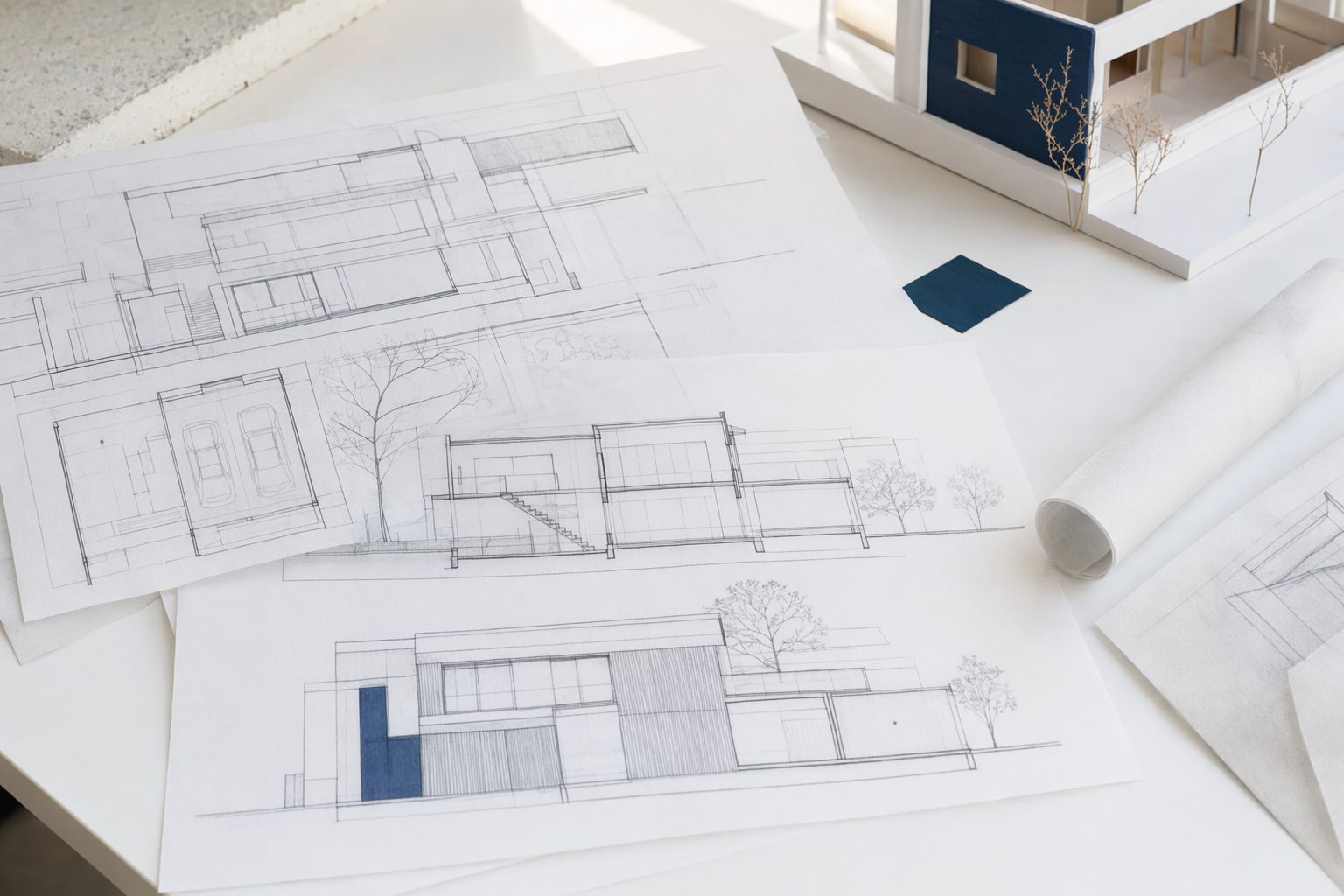
Construction documents are often called “CDs” or “permit drawings.” They usually show the floor plan, exterior views, building sections, dimensions, notes, and details that explain how the project should be built.
For many projects, they may also include sheets for structural, mechanical, electrical, and plumbing coordination. The exact set depends on the project size, your city’s rules, and whether the project is a house, addition, ADU, or commercial space.
In plain English: these are the drawings that turn an idea into a buildable plan.

Why they matter
Construction documents help everyone work from the same information. They give the contractor a more complete picture of the work, and they help the local building department review whether the project appears to follow code and local rules.
They also reduce confusion during bidding and construction. Better documents usually mean fewer questions later, but they do not remove all risk. Field conditions, code interpretations, and project changes can still affect cost and schedule.
If you are planning a remodel or new build, it is smart to ask early what documents your city typically expects.
Who prepares them
For many projects, a licensed architect prepares the architectural portion of the construction documents. Depending on the project, other licensed professionals may prepare structural, civil, mechanical, electrical, or plumbing documents.
Studio Northing is not an architecture firm and does not create or stamp documents. We help you find and connect with a licensed architect who can discuss your project and explain what drawings may be needed.
Rules vary by state and city, so it is always important to verify the architect’s active state license before hiring.
Construction documents vs. schematic design
Schematic design is the early planning stage. It is where the layout, rough look, and general direction are explored. Construction documents come later, after the design is developed enough to be turned into detailed drawings.
A simple way to think about it: schematic design answers “what should it be?” while construction documents answer “how exactly will it be built?”
If you are still deciding on room sizes, layout, or style, you may not be ready for final construction documents yet. A good architect can help you move from early ideas into a permit-ready set of drawings when the time is right.
How to get started
Start by collecting basic information: your address, project type, approximate budget, photos, any existing drawings, and your goals for the space. If you already know your city or county, that helps too because local requirements can change the documents you need.
If you want help understanding the process, browse our guides. If you are ready to talk to a professional, we can connect you with a licensed architect for a project conversation. You can also review our services page to see how the free matching service works.
The first conversation is usually about your project goals, timeline, and what level of documentation may be needed. From there, you can decide whether to move forward.
In plain English
Construction documents are the detailed drawings and notes that help explain a project for pricing, permits, and construction — and Studio Northing can help you find a licensed architect for them.
Always hire a licensed architect, and verify the state license yourself before work starts. General information, not architectural, engineering, or legal advice.