Stamped drawings in plain language
“Stamped drawings” are permit-ready plans that are reviewed for safety and code compliance, then signed and sealed by a licensed professional. The “stamp” usually means the person who is legally allowed to do that work has taken responsibility for the documents.
For most building projects, cities require stamped drawings before they will accept your permit application. Rules can vary by state and city, so it’s important to confirm what your local permitting office expects.

Who usually provides the stamp?
In the US, the stamp is typically provided by a licensed architect and/or a licensed engineer, depending on the project scope. For example, an architect commonly stamps building layout, envelope, and architectural design for plan review.
MEP drawings—mechanical, electrical, and plumbing—are often stamped by engineers, because those systems must meet specific code requirements. “Architectural vs. engineering” can be confusing, but the key point is: the stamp must come from the right licensed professional for that part of the work.
What’s inside stamped drawings?
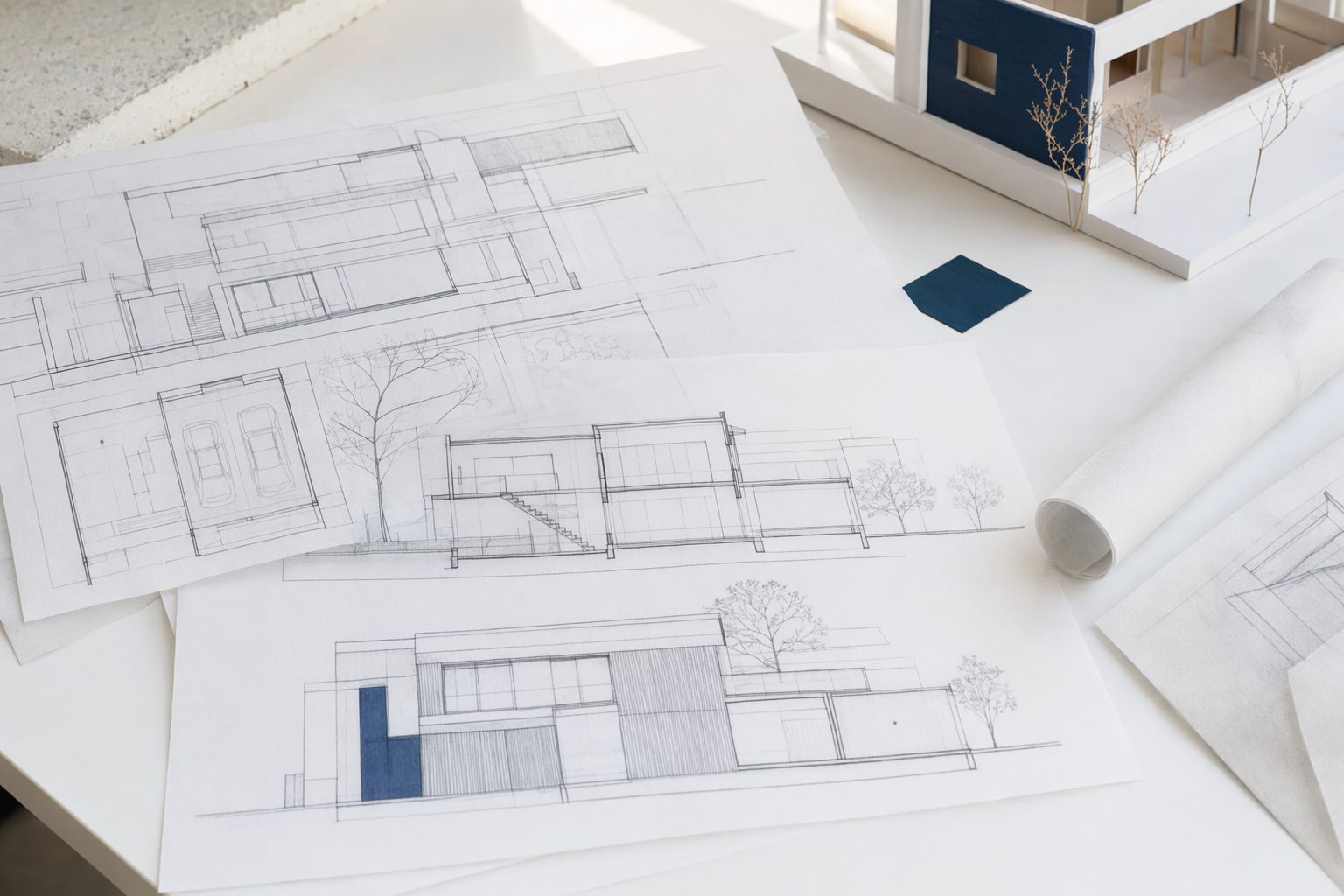
Stamped drawings are more than “pretty pictures.” They usually include multiple plan sheets such as:
• Site plans (where the building sits, parking, access, drainage)
• Floor plans and elevations (room layout and exterior views)
• Building sections (how the building is constructed vertically)
• Details (specific construction methods)
The full set can also include structural drawings, code notes, and technical calculations—especially when required by your local jurisdiction.
Why cities require stamps
Cities use stamped drawings as part of their plan-review process. The stamp helps show that a licensed professional prepared (or reviewed) the documents and that the plans align with the applicable building codes.
Important: a stamp does not automatically guarantee permit approval. Review outcomes depend on many factors, like completeness, code requirements, and how your project fits zoning rules.
How to get to stamped, permit-ready plans
A typical process goes from initial design work to code-focused drawings, then to permit submittal. In plain terms, “permit-ready” means the drawings are organized, complete, and meet what your city asks for.
If you’re not sure what your city needs, start by checking the permit office’s requirements. Then we can help you find a licensed architect who works on similar projects (custom homes, additions, renovations, ADUs, and commercial design) and can explain the steps for your location.
Free matching: connect with a licensed architect
Studio Northing is a FREE service that helps you get matched with a licensed architect for your project. We’re not an architecture firm, and we don’t stamp drawings ourselves—but we can connect you with qualified pros for permit-ready plans.
To get started, visit get matched. You can also explore our overview of how the process works in guides and our project types in services.
In plain English
Stamped drawings are permit-ready building plans signed and sealed by licensed professionals so the city can review them—rules vary, and you can get free help matching with an architect.
Always hire a licensed architect, and verify the state license yourself before work starts. General information, not architectural, engineering, or legal advice.