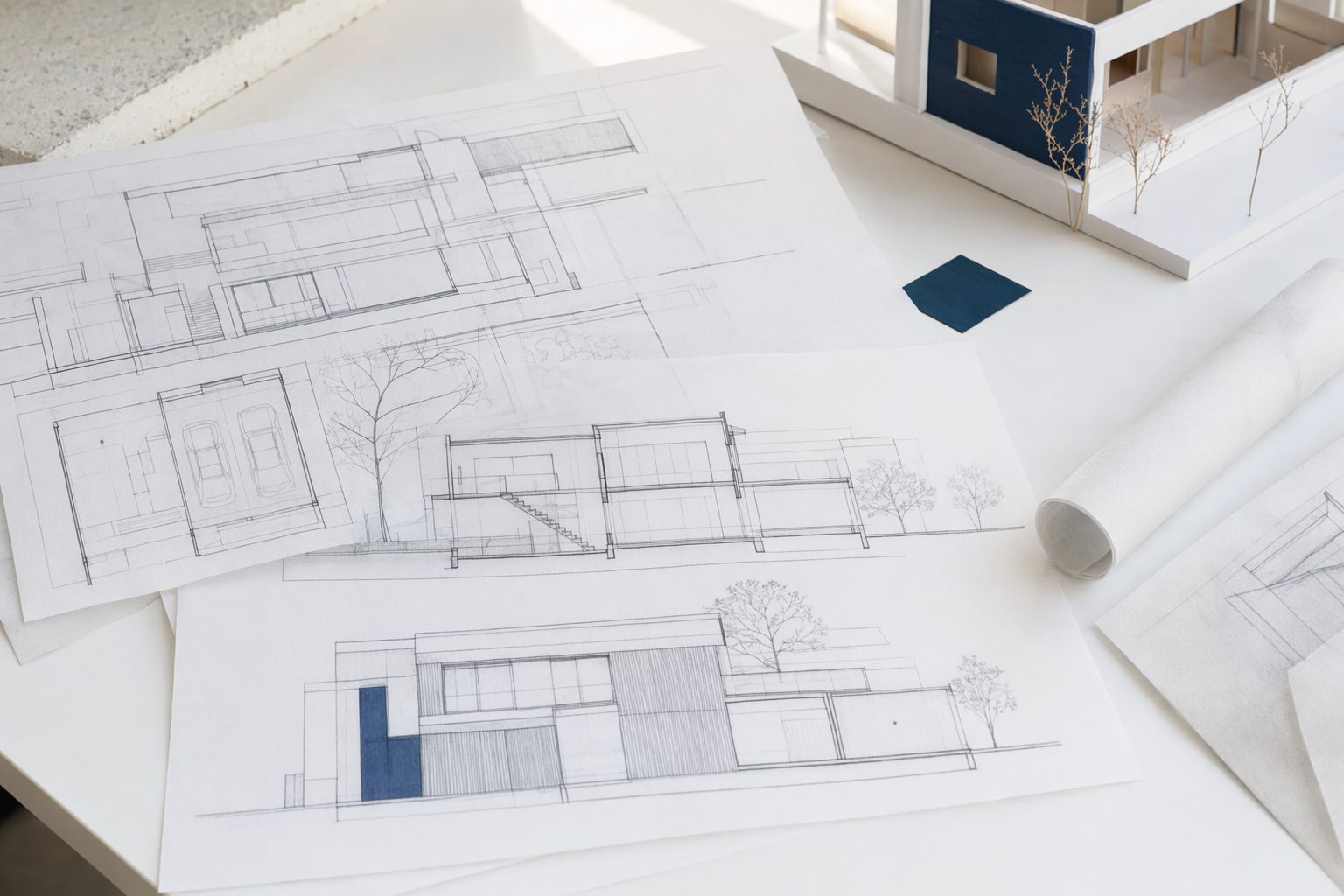
What a building section shows
A building section is a vertical view. Instead of looking at the outside of a building, you look inside through a sliced line on the drawing. This helps show things that a floor plan cannot show clearly, like ceiling height, stair layout, roof structure, and changes in level.
For a homeowner or business owner, a section can make a project easier to understand. It can show whether a room feels open or tight, how tall a wall is, or how an addition connects to the existing building.
A section is usually one part of a larger set of drawings. You may also see floor plans, elevations, and details. Together, these drawings help describe the project more clearly.

Why sections matter in a building project
Sections are useful because they answer questions that come up during design and permit review. For example: How high is the ceiling? Does the new roof line match the old one? Will a stair fit safely? Is there enough space for insulation, structure, or mechanical systems?
They also help different people communicate. A client, architect, builder, and reviewer may all understand the project better when they can see the same cut-through view. That can reduce confusion later, though it does not remove the need to check local code requirements.
Rules vary by state and city. A licensed architect can help decide which sections are needed for your project and how detailed they should be.
Common parts you may see in a section drawing
A section drawing often includes the floor, walls, ceiling, roof, windows, doors, and stairs where they are cut through. It may also show structural parts, such as beams or posts, and sometimes insulation or material layers.
Some terms can sound technical, but the idea is simple. A section shows how the building is stacked from bottom to top and how the pieces connect. If you see notes about MEP, that refers to mechanical, electrical, and plumbing systems. If you see a note about a setback, that means how far a building must stay from a property line, which is regulated locally.
You may also see a “cut line” on a floor plan. That line shows where the section was taken from. Arrows usually show the viewing direction.
When you may need one
Sections are often helpful for additions, second-story projects, attic conversions, basement remodels, ADUs, and commercial tenant improvements. They are especially useful when the project changes height, slope, structure, or level.
If your project is simple, you may need only a few sections. If it is more complex, you may need several. A licensed architect can help determine what is typically required for design and permit documents in your area.
If you are just getting started, it can help to look at examples and learn the basics first. Our guides can help you understand common drawing types before you speak with a professional.
How Studio Northing can help
Studio Northing is a free service that helps you understand the process and get connected with a licensed architect for your project. We do not provide architectural, engineering, or legal advice, and we are not an architecture firm.
If you are planning a custom home, renovation, addition, ADU, or commercial project, we can match you with a licensed architect who may be a fit for your needs. You stay in control of who you hire, and you can ask questions before moving forward.
If you want to see what services are typically part of a project, visit our services page.
In plain English
A building section is a side-view drawing that shows how a building fits together vertically, and a licensed architect can help you figure out what drawings your project may need.
Always hire a licensed architect, and verify the state license yourself before work starts. General information, not architectural, engineering, or legal advice.