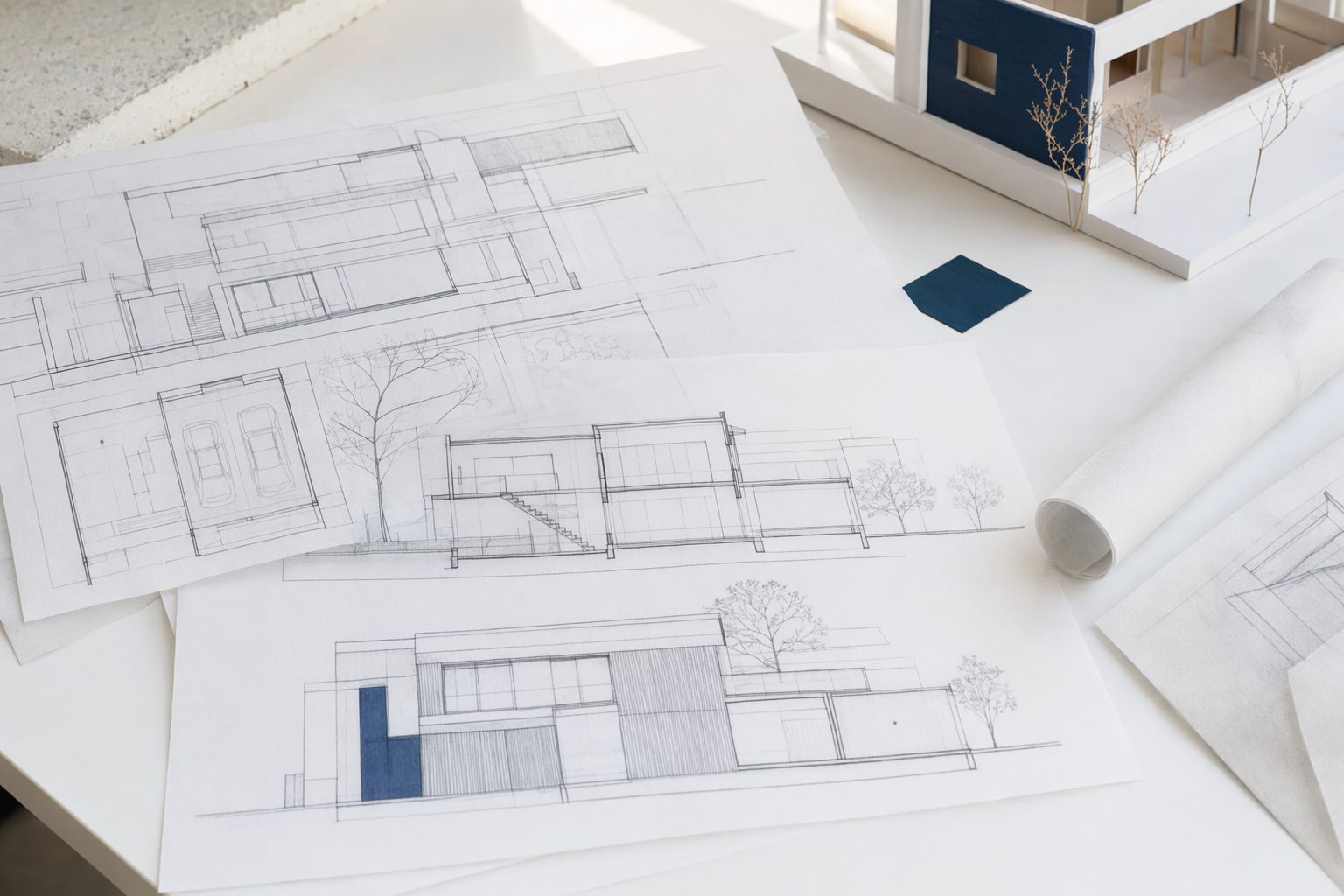
Floor plan definition (plain English)
A floor plan is a drawing that shows the layout of a building from above. It maps rooms, walls, doors, windows, and usually the path of movement from one space to another.
Think of it like a “room-by-room map.” It helps you and your architect talk clearly about what you want to build or change—before construction starts.
In most building projects, a floor plan becomes part of the permit-ready package, but the exact documents required vary by city and state.

What a floor plan typically includes
Floor plans can look different depending on the project, but common elements include:
Walls and room shapes, including interior partitions and exterior walls.
Doors and windows, often with sizes and swing directions (for doors). This matters for accessibility and for avoiding conflicts with cabinets, stairs, and furniture.
Sometimes you’ll also see notes like room names, dimensions, ceiling heights, and references to electrical or plumbing fixtures. For mechanical systems (often called MEP—mechanical, electrical, and plumbing), more detailed drawings may be separate.
Why floor plans matter for homeowners and businesses
A good floor plan helps you answer practical questions early. How will people move through the space? Where will natural light come in? Do room sizes fit your needs?
It also helps reduce surprises. If a layout doesn’t work with the site, structure, or code requirements, it’s easier to change the plan before work begins.
For businesses, floor plans can be especially important for planning customer flow, employee work areas, storage, restrooms, and sometimes requirements related to occupancy and safety.
How floor plans connect to permits and drawings
Permits usually require more than a single picture of rooms. Floor plans often work together with other drawings, such as:
Site plan (where the building sits on the property). Sections/“elevations” (how the building looks from the outside). Construction details (how specific parts are built).
In many cities, code and zoning rules affect what’s allowed. Examples include setbacks (how far you must keep the building from property lines) and height limits. Floor plans help show how the design meets or addresses those requirements.
Rules vary by location, so always confirm requirements with your local permitting office or your licensed architect.
What to expect when you’re hiring an architect
When you reach out for design help, you should expect the architect to ask about your goals, timeline, and constraints. During early stages, you may hear terms like “schematic design.” That usually means a first pass at layout and big-picture ideas—not final construction instructions.
Later stages typically become more detailed and may include permit-ready drawings.
Important: Studio Northing is not an architecture firm, and we don’t provide engineering or legal advice. We help you find and get matched with a licensed architect who can guide you through the process. For next steps, explore get matched and also browse our guides.
How to prepare so your floor plan conversation goes faster
You don’t need technical drawings to get started, but these basics help your architect understand your needs quickly:
Share measurements you have (even approximate). Bring a copy of any existing floor plan if you have one.
Tell them what you want to improve: more bedrooms, better kitchen flow, an ADU layout, accessibility needs, or commercial layout goals.
If you have a site plan or property survey, share it. If you don’t, the architect may help you determine what’s needed next.
If you’re using our free service, we can also help you get in touch with a licensed professional for your project type through services.
In plain English
A floor plan is a top-down map of your building’s rooms and layout, and it’s a key step for clear design and often for permit-ready drawings—get free help matching with a licensed architect.
Always hire a licensed architect, and verify the state license yourself before work starts. General information, not architectural, engineering, or legal advice.