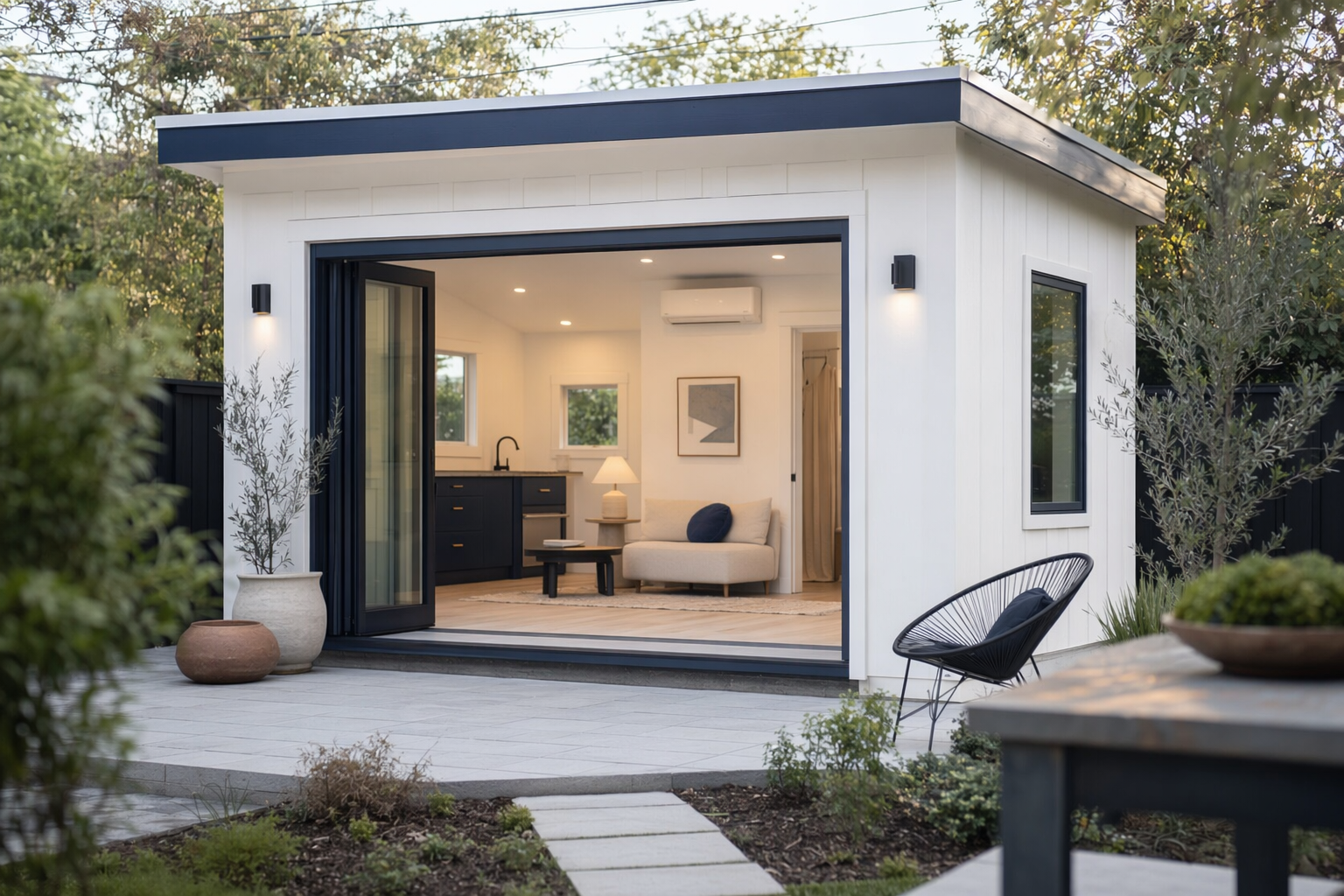
The goal: add a rental unit without expanding the footprint
A homeowner had a detached garage on their property and wanted more rental income. They liked the idea of converting the garage rather than building new space from scratch.
The main priorities were simple: create a comfortable, legal place to live; keep costs and timeline as predictable as possible; and make sure the design would be able to go through city permitting.
Because rules vary by city and state, they decided to start with architecture support early—before signing with contractors or buying materials.

Why a licensed architect mattered for an ADU
An ADU conversion can involve more than “finishing the inside.” Cities often require permit-ready drawings that address building layout, egress (safe exits), fire separation, plumbing and electrical (MEP), and sometimes site details like parking, access, and setbacks.
A licensed architect can help organize these requirements into a coherent plan and prepare drawings for the permitting process. Studio Northing is not an architecture firm—we help you find and get matched with a licensed architect who can create permit-ready documentation for your specific project.
Before committing to anything, the homeowner confirmed the architect’s credentials and discussed local requirements for their address.
How we helped: matching the homeowner with a licensed architect
The homeowner used Studio Northing for free to share the basics of their property and project: detached garage location, approximate size, and the kind of ADU they wanted (a long-term rental unit).
We then helped connect them with a licensed architect who could review the scope and outline a path toward permit submission. The match focused on communication style, experience with ADUs, and comfort working through typical plan review questions.
To learn more about the next steps, see how matching works and what we offer in services.
The design process (in plain language): from concept to permit-ready drawings
First, the architect focused on feasibility and planning. That usually means understanding zoning rules and site constraints such as setbacks, access, and whether the garage conversion meets ADU definitions.
Next came schematic design. This is the stage where the layout is tested: rooms, bathroom placement, door and window locations, and the general “shape” of the unit. It’s also where the architect coordinates early with the realities of construction—structure, walls, and ceiling heights.
Then came permit-ready drawings. These are the documents the city reviews. They typically include floor plans, elevations, and details needed for code compliance. Depending on the project, the architect may coordinate with other licensed professionals for things like engineering or specialized building systems.
Important note: we can’t promise approvals or permit timelines. The architect’s drawings aim to satisfy the rules that apply to that site, but final outcomes depend on the local plan review process.
Common permit review questions in garage ADUs
For a detached garage conversion, plan reviewers often look closely at safety and habitability. In this anonymized case, the architect prepared the drawings with these items in mind:
- Egress and means of exit (how occupants safely leave the unit)
- Fire and life-safety considerations, including how walls and openings are handled
- Plumbing and electrical coordination (MEP), so the unit can function as a rental home
- Site-related rules, such as access and required clearances
The homeowner appreciated having one consistent set of permit-ready documents rather than piecemeal decisions. That reduced back-and-forth with contractors and helped keep the project organized.
If you’re starting from scratch, our ADU guide can help you understand what cities typically require.
Result: a permitted rental ADU and a clearer next step
After the city review cycle, the project moved forward as a permitted ADU. The homeowner had a clearer plan for construction because the permit documents set boundaries for what could be built.
Just as important, they avoided common mistakes—like changing the layout late in the process or assuming a conversion is “easy” because it’s already a building.
This case is anonymized, but it reflects a typical experience: converting a detached garage into a legal rental unit often works best when you involve a licensed architect early and plan around local permitting requirements.
Want help similar to this homeowner? Browse projects or get matched through our free intake.
In plain English
See how an anonymized homeowner turned a detached garage into a permitted rental ADU with a licensed architect’s drawings—then learn how Studio Northing helps you get matched for your own project.
Always hire a licensed architect, and verify the state license yourself before work starts. General information, not architectural, engineering, or legal advice.