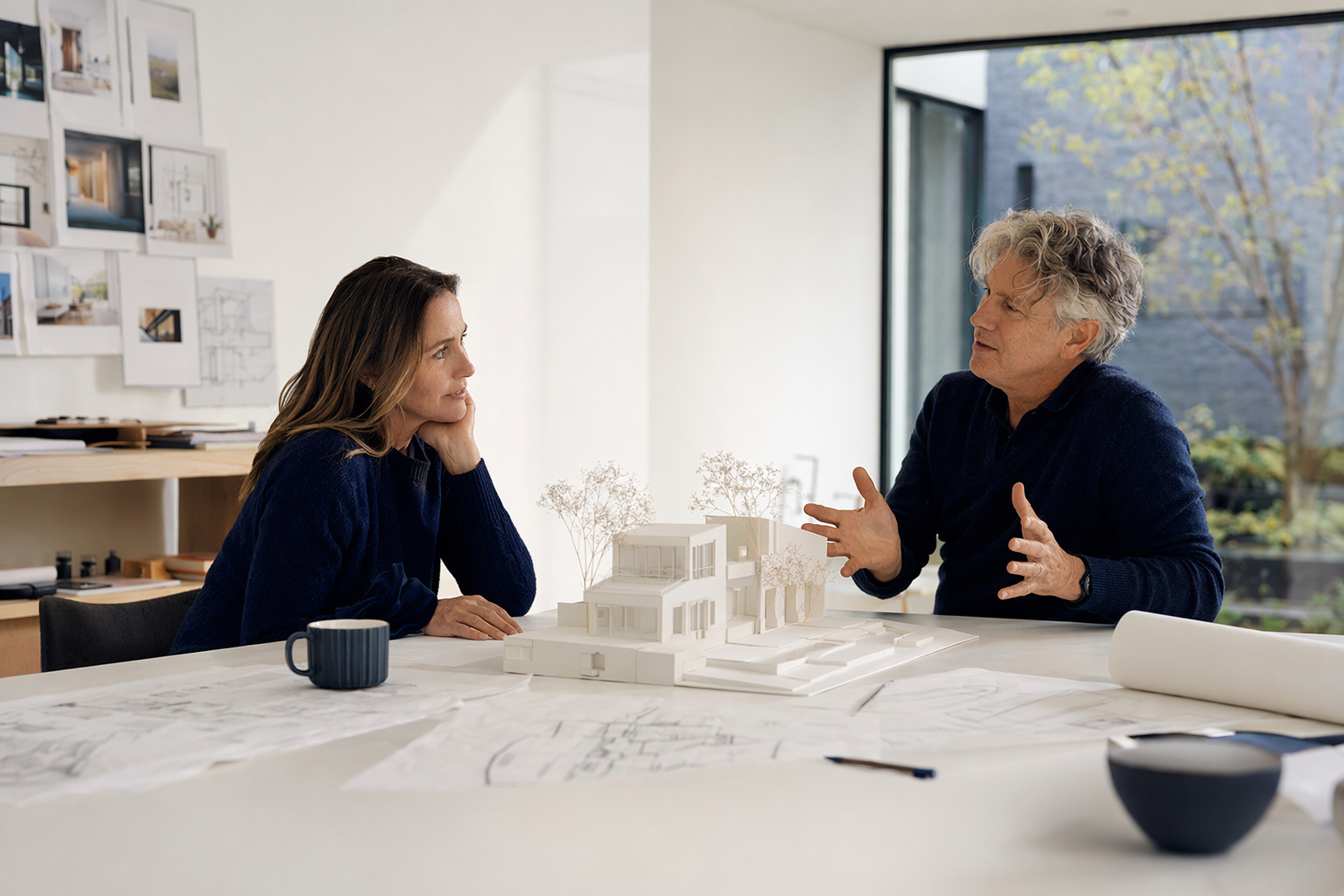
Start with the key question: what kind of work is it?
In the U.S., whether you need a licensed architect depends on your project scope and your local rules. Some projects are mostly interior updates. Others change the building’s structure, footprint, or systems.
As a general rule, the more you change the building’s “shell” or layout, the more likely you need a licensed professional for permit-ready drawings. If you’re adding square footage, modifying load-bearing walls, changing plumbing or electrical layouts, or building something new, you’ll usually need more formal drawings.
If you’re unsure, we can help you find and match with a licensed architect who can review your needs and explain what documents are typically required for permits in your area. Get matched.

When an architect is legally required (and when it might be)
Some states require a licensed architect for certain building types or certain drawing sets. Other jurisdictions may require architect-of-record on permit documents. Rules can also vary between city and county offices.
Even when an architect is not strictly required by law, your local building department may still expect architect-level plan sets for things like:
- Larger additions or remodels
- New construction
- Projects that require structural coordination (framing changes, load-bearing walls)
- Work affecting fire/life safety details
Because the exact triggers vary, the safest path is to confirm your state license requirements and talk to your building department. An architect can also help you understand what the permit process usually expects in your area—without guessing.
Draftsperson, designer, architect, or contractor: what’s the difference?
People often use these titles interchangeably, but they usually do different things. A draftsperson typically produces drawings based on someone else’s design direction. A designer may focus on aesthetics and layouts, but licensing requirements vary. An architect is a licensed professional trained to design and coordinate building projects and to prepare permit-ready drawings when required.
A contractor builds. Contractors usually price and schedule construction, and they may also provide drawings for small scope work. However, permit-ready architectural plan sets are often separate from the construction contract.
If you want an easier decision, think in terms of deliverables: will you need formal, code-aware drawings for permits? If yes, you’ll likely need an architect (or another licensed professional, depending on your state).
Common “clues” you may need an architect
You may want to plan for a licensed architect if your project includes any of the following. These are educational clues—not a guarantee about your specific case.
- Structural or layout changes: removing or adding walls, changing the plan footprint, or reconfiguring load-bearing elements
- Additions: adding rooms, garages, ADUs, or increasing building area
- Exterior changes that affect permits: major façade changes, new openings, changing roof forms
- MEP coordination needs: significant changes to plumbing, HVAC, or electrical layouts (MEP = mechanical, electrical, plumbing)
- Complex site constraints: unusual setbacks, grading, or multiple units
For jargon: a setback is the required distance from property lines. Setbacks and other site rules often drive where and how a building can be placed. FAR (Floor Area Ratio) limits how much floor area you can build on a site in some cities.
How to decide for your project (a practical checklist)
Use this checklist to decide who you should contact first. This keeps you from paying for the wrong type of drawings.
1) Check what your permit office asks for. Look at the permit application page or call and ask what drawing types are required for your scope.
2) List what’s changing. Write down: walls changed, footprint changed, new windows/doors, new bathrooms/kitchens, electrical/plumbing moves, mechanical changes.
3) Ask about the drawing level. You want to know whether the work requires schematic design, code coordination, and permit-ready plan sets.
4) Confirm licensing. Verify the architect’s license in your state (and confirm they’re allowed to practice where the project is located).
5) Plan your timeline. Permit-ready drawings can take time because they must coordinate design, site constraints, and code items.
If you share your project details, we can help you find and match with a licensed architect for permit-ready drawings and clear next steps. Explore services to see what we help with.
Not sure? We can help you get clarity—free.
Studio Northing is a FREE service that helps homeowners and businesses across the U.S. understand how to hire a licensed architect and get matched with one for their project—custom homes, additions, renovations, ADUs, and commercial design.
We don’t provide architectural, engineering, or legal advice, and we can’t promise approvals or permit success. But we can connect you with a licensed architect and help you ask better questions so you can move forward with confidence.
Start here: Get matched. If you’re comparing budget and scope, you can also review architect fees explained.
In plain English
You may need a licensed architect for projects that change structure, layout, footprint, or require permit-ready plans—check local rules and confirm licensing, and we can help you match with an architect for your scope.
Always hire a licensed architect, and verify the state license yourself before work starts. General information, not architectural, engineering, or legal advice.