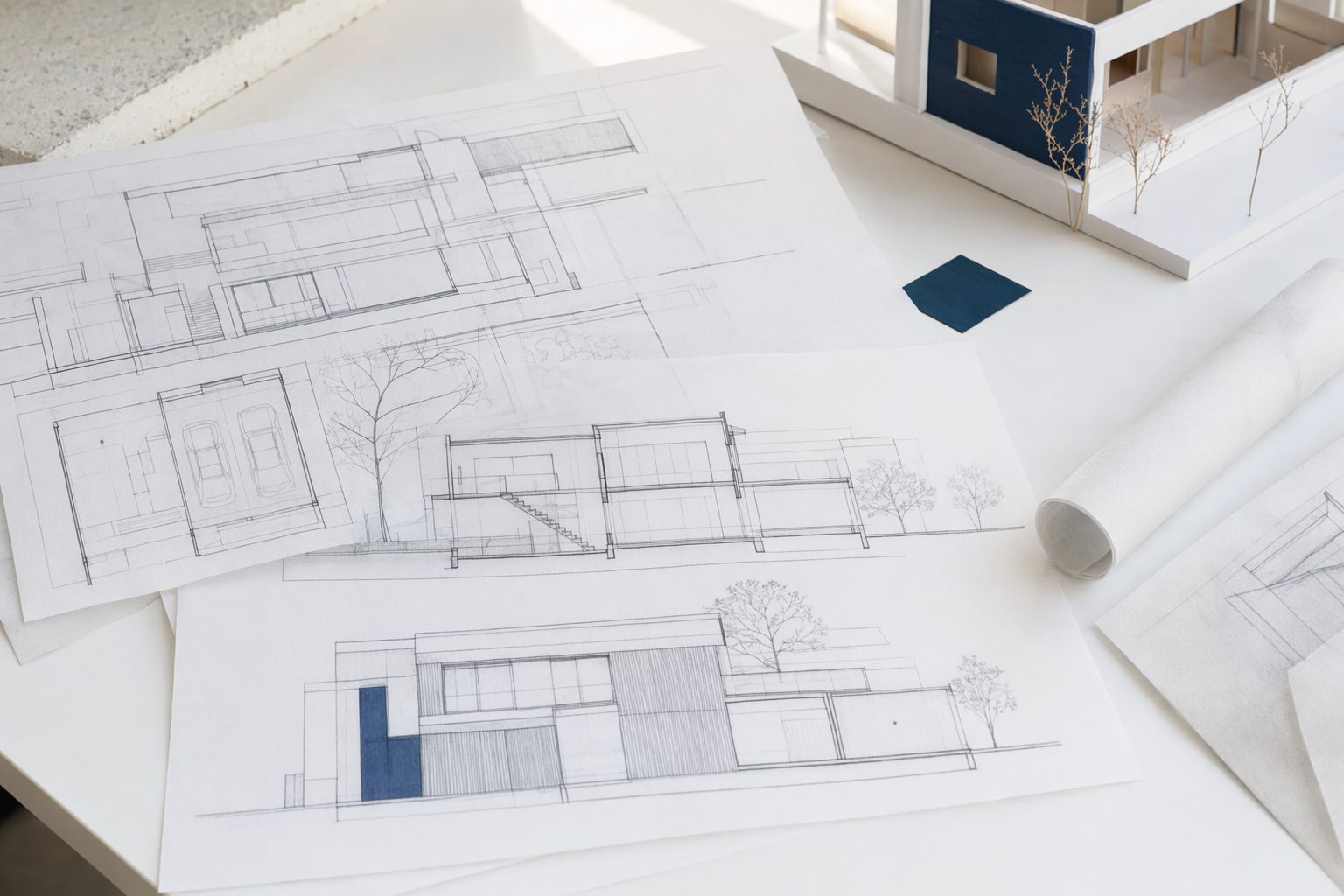
Start with the drawing set as a whole
A full drawing set is a group of pages that work together. It usually includes floor plans, elevations, sections, and details. Each page shows the project from a different angle, so no single drawing tells the whole story.
Look for the sheet index or cover page first. That page helps you find the right drawings and understand the order. You may also see abbreviations, notes, and symbols that point to more information elsewhere in the set.
If you are new to this, it helps to read the drawings in a simple order: floor plan first, then elevations, then sections, then details. That gives you the overall layout before you look at the smaller construction information.

Read the floor plan first
The floor plan is the top-down view of a space, as if the roof were removed. It shows rooms, walls, doors, windows, and major fixtures. This is usually the best place to understand how the building will function day to day.
Pay attention to room labels, dimensions, and door swings. Dimensions tell you sizes and distances. Door swings show which way a door opens, which matters for circulation and furniture placement. You may also see notes for items like cabinets, stairs, appliances, or accessible clearances.
A floor plan can also show code-related information, such as exits, accessible routes, or areas that count toward floor area. If a term like FAR comes up, it means floor area ratio — a zoning rule that limits how much building area is allowed on a site. Rules vary by city, so the same plan can be treated differently in different places.
Use elevations to understand the outside look
Elevations are flat views of the building from the outside, usually one side at a time. They help you understand height, roof shape, window placement, exterior materials, and how the building will look from the street or yard.
If a floor plan shows layout, an elevation shows appearance. You can compare the elevations with the floor plan to see whether windows line up with rooms, where doors are located, and how tall the building will feel.
Elevations also help you spot design questions early. For example, you may notice that a window is higher than expected, or that the roof line affects privacy, shade, or neighbors’ views. Those are useful things to discuss before moving forward.
Sections show the building cut open
A section is like a vertical slice through the building. It shows what is happening from the ground up: foundations, floor-to-floor height, ceiling height, roof structure, stairs, and sometimes mechanical spaces.
This drawing is especially useful when you want to understand volume and height. A room may look normal on a floor plan but feel very different in section if the ceiling is low, the roof slopes, or the floor is raised.
Sections can also show how parts of the building connect. For example, they may explain how an addition meets an existing house, how an ADU relates to the yard, or how a stair fits within a compact layout.
Details and notes explain how things are built
Details are close-up drawings of one small part of the project. They may show a wall build-up, a window head, a stair connection, a waterproofing condition, or a cabinet detail. These are the drawings that often answer the question, “How exactly does this work?”
Notes are just as important. They may define materials, installation requirements, or coordination points with structural, mechanical, electrical, or plumbing work. MEP means mechanical, electrical, and plumbing — the systems that make a building work, such as heating, wiring, lighting, and water.
You do not need to understand every note right away. But you should know that details are where the practical construction information lives. If something seems confusing, ask your architect to point to the exact sheet and explain it in plain language.
How to review drawings with confidence
When you review drawings, focus on three questions: Does the layout fit your needs? Does the building look the way you expect? And do the dimensions match the spaces you can actually use? Those questions are often more useful than trying to decode every symbol at once.
It also helps to compare the drawings against your goals and budget. If you are early in the process, learn more about the overall process so you know where drawings fit in. If you are trying to understand architect pricing and services, this fee guide may help you prepare better questions.
If you do not yet have a licensed architect, we can help you find one based on your project type. We do not provide architectural services ourselves, but we do help connect homeowners and businesses with licensed architects for custom homes, additions, renovations, ADUs, commercial design, and permit-ready drawings.
In plain English
Floor plans show layout, elevations show the outside, sections show height and structure, and details explain the small construction parts.
Always hire a licensed architect, and verify the state license yourself before work starts. General information, not architectural, engineering, or legal advice.