The short answer
You can absolutely sketch your ideas, gather inspiration, and think through rooms, sizes, and how you want the home to feel. That is a normal first step for a custom home, addition, or renovation.
But “designing your own house” is different from producing permit-ready construction documents. Those drawings usually need to follow local zoning and building rules, and in many cases they must be prepared or reviewed by a licensed architect or other licensed design professional, depending on where you build.
If you are not sure what your city or state requires, we can help you find a licensed architect and explain the usual next steps in plain English through our services.

What you can do yourself
Homeowners often begin with the concept. You can make a simple room list, draw rough floor plan ideas, collect reference photos, and decide on priorities like more light, an open kitchen, a home office, or an ADU.
You can also prepare helpful basics for a future architect, such as your budget range, lot size, neighborhood context, and what currently feels wrong with the space. That makes the first conversation more productive.
This is especially useful if English is not your first language. A good early sketch or checklist can help you explain your ideas clearly, even if you do not know design terms yet.
Where professional help usually matters
A real project has more than style choices. It also needs code compliance, structural coordination, accessibility rules, energy requirements, fire separation, setbacks, and other local limits. For example, “setback” means how far a building must stay from property lines.
Permit drawings often need more than a nice floor plan. They may need site plans, elevations, sections, and details that show how the project will be built. Some projects also require coordination with engineers for structure, mechanical, electrical, and plumbing, often called MEP.
That is why many people start with their own ideas, then work with a licensed architect to turn those ideas into a buildable plan. We do not provide architectural, engineering, or legal advice, but we can help you understand the process and get matched with a licensed architect.
When you may need an architect sooner
It is smart to bring in a licensed architect early if your project is complex, such as a custom home, major addition, ADU, or commercial tenant improvement. You may also want help sooner if your lot is small, sloped, tight, or subject to local design review.
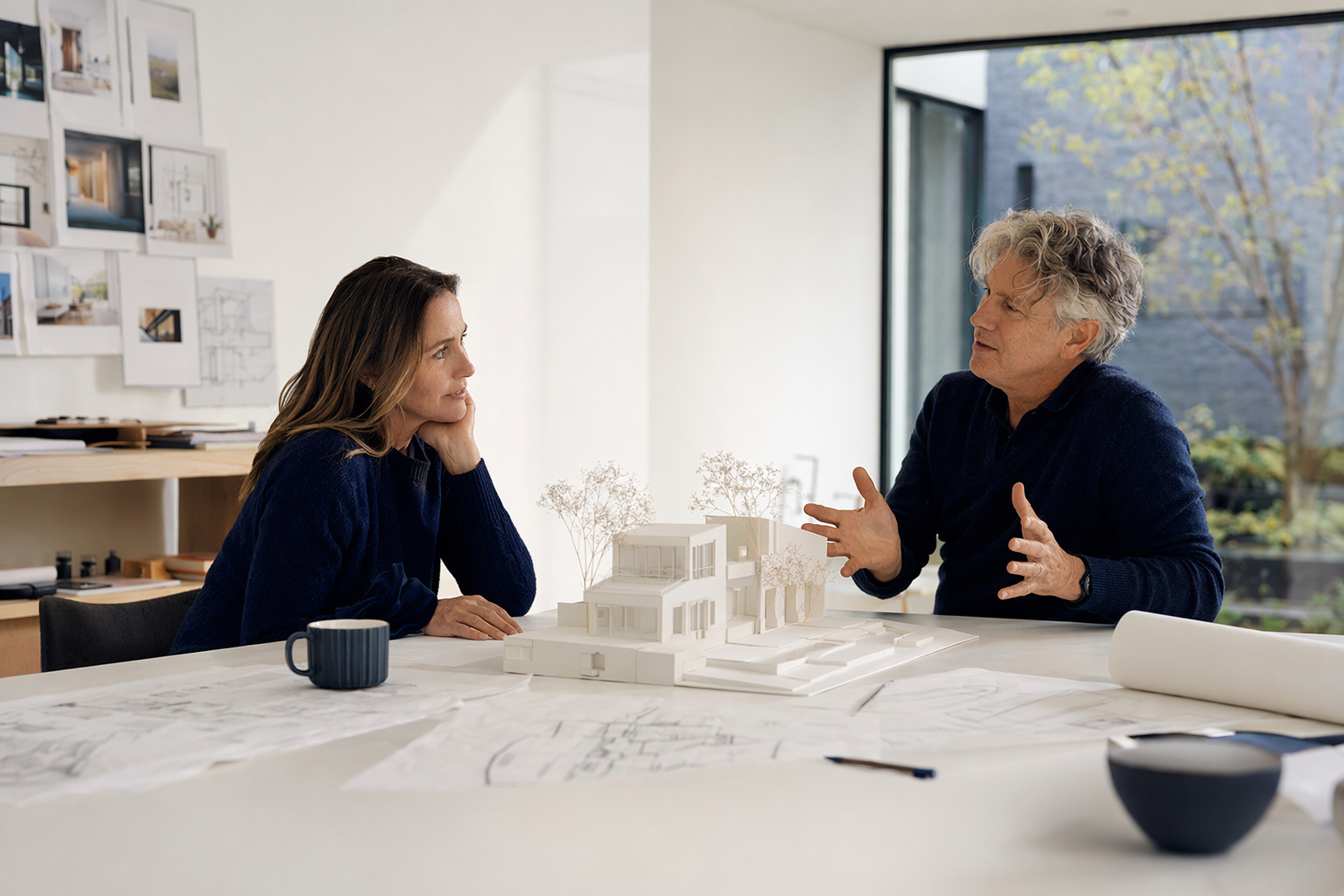
An architect can help you think through layout, light, circulation, privacy, and how the project might fit within local rules. They can also coordinate with consultants when the project calls for it.
If you are comparing options, our guides explain common project types and what to ask before you hire.
How the free matching service works
Studio Northing is not an architecture firm. We do not design, stamp, or approve plans ourselves.
Instead, we help you find and connect with a licensed architect who may be a fit for your project. The service is free for you. Participating licensed architects pay a flat fee to be matched with projects, and that does not change your cost or our guidance.
You should always verify an architect’s state license and make sure they are licensed in the state where your project is located. Rules can vary by state and city.
In plain English
You can design the idea for your own house, but most real projects still need a licensed professional to turn that idea into code-compliant drawings and guide the permit process.
Always hire a licensed architect, and verify the state license yourself before work starts. General information, not architectural, engineering, or legal advice.