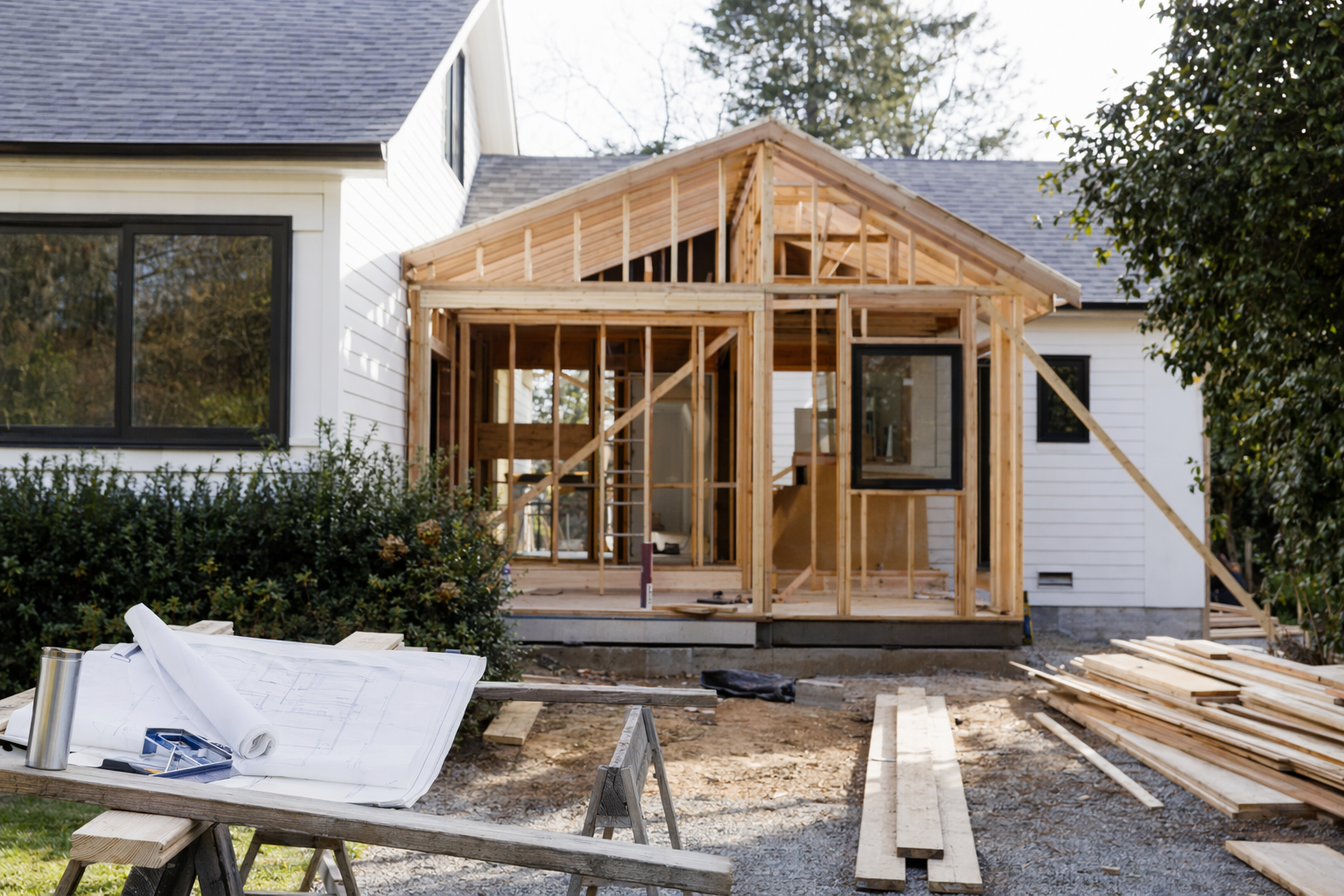
The short answer
You do not always need an architect for an addition. In some cities, a simple project may be allowed with permit drawings prepared by a residential designer, draftsperson, or contractor. In other places, a licensed architect is strongly recommended or effectively necessary because of code, zoning, structural changes, or permit requirements.
A licensed architect can help when the addition affects layout, structure, rooflines, natural light, circulation, energy performance, or how the new space connects to the old house or building. They can also coordinate with engineers when needed. Rules vary by state and city, so it is important to verify local requirements before you hire anyone.
Studio Northing is not an architecture firm, and we do not provide design, engineering, or legal advice. We share general information and help you find a licensed architect if your project calls for one.

When hiring an architect makes the most sense
An architect is often worth it when the addition is more than a basic box added to the back of a building. If you are changing the structure, moving major walls, adding a second story, building over a garage, reworking stairs, or trying to make the new space look like it belongs, design skill matters.
Architects can also be especially helpful on tight lots or older homes. If your property has setback limits, height limits, lot coverage limits, or historic review, the design work can get complicated fast. A setback is the required distance between your building and the property line. Lot coverage is how much of the site your building and sometimes paved areas can occupy.
They are also useful when the addition needs to solve several problems at once. For example, you may want more space, better light, improved storage, a clearer entry, and a smoother floor plan. An architect can help turn that into one coordinated plan instead of a series of small fixes.
For small businesses, an architect is often the safer path when the addition changes occupancy, accessibility, exits, fire separation, or customer flow. Commercial rules are usually stricter, and permit review can involve more agencies.
When an architect may not be necessary
If your addition is very simple, your local building department may allow another qualified professional to prepare the drawings. This can happen with straightforward one-story additions, enclosed porches, or basic room expansions where the design and structural issues are limited.
Even then, someone still needs to produce clear permit-ready drawings, and the project may still require a structural engineer, survey, energy documents, or other consultants. Permit-ready drawings are the plans and details the city or county needs in order to review the project for code compliance. They are not just rough sketches.
The risk with choosing only the lowest-cost drawing option is that the plans may meet minimum permit requirements but not fully solve the design problems of the house or building. A cheap set of drawings can become expensive if it leads to change orders, awkward spaces, or delays during construction.
If you are unsure, it can help to compare options. Our services page explains the kinds of projects licensed architects often handle, and we can match you with an architect if you want a professional opinion.
Questions that usually decide it
Ask yourself a few practical questions. Is the addition changing the structure? Will it require new beams, foundation work, or roof changes? Are you touching plumbing, electrical, or HVAC systems? HVAC means heating, cooling, and ventilation. If the answer is yes to several of these, professional design coordination becomes more important.
Next, think about zoning and site limits. Will the addition come close to property lines? Does your area limit floor area ratio, often called FAR? FAR is a rule that limits the total building area allowed on a lot relative to lot size. If your site is tight, a licensed architect may help you explore compliant options before you spend money on full drawings.
Also consider your goals. If you only need extra square footage and the design is very simple, you may not need full architectural services. But if you care about resale value, curb appeal, daylight, flow, privacy, or making the old and new parts feel seamless, an architect can add value beyond the permit set.
Finally, check who will coordinate with other consultants. Many additions need structural engineering, and some need civil, landscape, or MEP input. MEP means mechanical, electrical, and plumbing systems. An architect often helps organize that team, though the exact setup varies by project.
What an architect may help you with on an addition
A licensed architect may help you evaluate what is possible on your lot, develop layout options, prepare drawings for permit review, and coordinate with engineers or other consultants. Depending on the agreement, they may also help compare contractor bids or answer construction questions during the build.
This does not mean every architect offers the same level of service. Some provide only permit drawings. Others stay involved from early design through construction. It is smart to ask what is included, what is not, and what additional consultants may be needed.
Fees vary widely by region, project type, and scope. As a general educational range, full architectural services for residential work are often priced as a percentage of construction cost or as a fixed fee, while limited-scope permit drawing packages may cost less. Complex additions usually cost more to design than simple ones because they require more coordination and problem-solving.
If you want help understanding your options, start with our guides or use our free service to get matched with a licensed architect.
How to decide before you hire anyone
Start with your local building department and zoning information. Ask what kind of drawings are required for your type of addition and whether a licensed architect is required or commonly used. Then verify the professional's state license if you decide to hire an architect.
When you speak with architects, ask to see examples of additions, not just new houses or interiors. Ask how they approach existing-condition measurements, code research, permit coordination, consultant needs, and construction administration. Construction administration means helping interpret the drawings and respond to questions during construction. It is different from actually building the project.
You should also ask how they handle budget alignment. No one can promise a final construction number early on, but a good architect should be able to discuss typical cost drivers, likely tradeoffs, and how design decisions affect price.
If you want, we can help you find a licensed architect for your addition at no cost to you. Studio Northing is a free matching service, not an architecture firm, and participating licensed architects pay a flat fee to be matched with projects.
In plain English
You may not need an architect for every addition, but for anything complex, constrained, or design-sensitive, a licensed architect is often the smartest path.
Always hire a licensed architect, and verify the state license yourself before work starts. General information, not architectural, engineering, or legal advice.