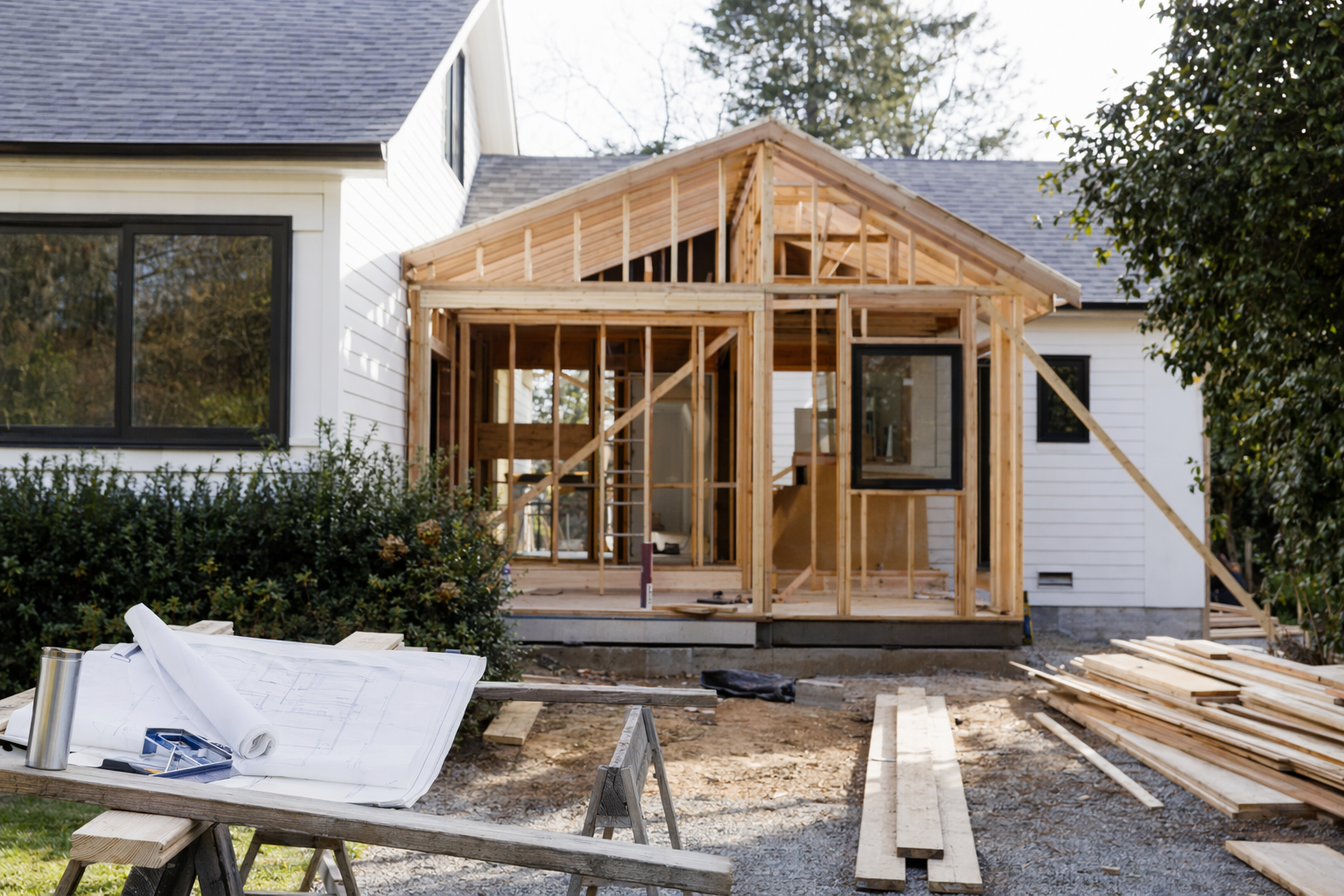
Typical addition design cost
For a home addition, architect fees are often charged as a percentage of construction cost, a fixed fee, or an hourly rate. A common range for full architectural services is about 8% to 15% of the construction cost, but some projects fall outside that range depending on complexity and location.
For smaller or simpler additions, some architects may offer a fixed fee for permit drawings and basic design. For example, a straightforward room addition may cost several thousand dollars in design fees, while a more complex second-story addition or major reconfiguration can cost much more.
Commercial additions can be priced differently, especially when accessibility, fire safety, mechanical systems, or change-of-use issues are involved. In many cities, requirements are stricter, and that usually increases design time and coordination.

What is usually included in the fee
Architect fees can cover very different levels of service, so it is important to ask what is actually included. One architect may price only permit-ready drawings, while another may include design options, 3D views, consultant coordination, and construction support.
A typical addition design process may include existing-condition measurements, schematic design, design development, and construction documents. Schematic design means early layout ideas. Construction documents are the drawing set used for permit review and pricing.
Some projects also need coordination with structural, civil, or MEP consultants. MEP stands for mechanical, electrical, and plumbing. Those consultant fees may be included in the architect’s proposal, or they may be billed separately.
Why one addition costs more to design than another
The biggest cost factors are usually size, structural complexity, and how much of the existing building is being changed. A simple ground-floor bump-out is often easier to design than a second-story addition over an older house with unknown framing.
Site and zoning rules matter too. Setbacks are the required distances between the building and property lines. FAR, or floor area ratio, is a rule that limits how much total building area can be built on a site. If the project is close to those limits, the design and permit process may take more time.
Older homes can also cost more to design for because hidden conditions are common. The architect may need to solve issues related to structure, ceiling heights, stairs, energy code, or matching the addition to the existing home in a clean way.
In commercial projects, added costs often come from code review, occupancy requirements, accessibility upgrades, and system coordination. Even a small addition can become more involved if it affects exits, restrooms, or parking.
Common pricing methods
Percentage-based pricing is common when the scope may evolve. It scales with the size and complexity of the project, which can make it easier to adjust if the design changes.
Fixed-fee pricing is often used when the architect can define the scope clearly from the start. This can be helpful for homeowners who want predictable pricing, but it is still important to read the proposal carefully and understand what happens if the scope grows.
Hourly pricing is sometimes used for early studies, feasibility reviews, or smaller tasks. Feasibility means checking whether the project seems possible under local rules and site conditions. Hourly work can be a good fit when you need advice before committing to full design services.
If you are comparing proposals, do not look only at the total number. Compare the phase breakdown, what drawings are included, whether consultant coordination is covered, and whether permit responses or construction administration are part of the service.
Other costs to budget for
Architect fees are only one part of the total project budget. You may also need structural engineering, survey work, soil reports, energy documentation, permit fees, and contractor pricing support. Rules vary by state and city, so the required team can look different from one place to another.
If your addition affects heating and cooling, plumbing, electrical service, drainage, or fire protection, consultant costs can rise. Historic districts, coastal zones, hillside sites, flood zones, and condo or HOA review can also add time and design effort.
This is one reason early planning matters. A low design fee is not always the best value if the drawings are incomplete or the scope is unclear. Clear documents can help reduce confusion during pricing and permitting, though no one can promise a specific outcome.
If you are not sure where to start, you can review our guides or use our free matching service to connect with a licensed architect for your type of addition.
How to compare architects for an addition
Ask each architect whether they have experience with your kind of project: rear addition, second-story addition, garage conversion, ADU, commercial expansion, or interior expansion tied to a larger remodel. Then ask how they price their work and what level of service they recommend.
You should also ask who will prepare the drawings, whether the architect will coordinate consultants, and how they handle permit comments. Studio Northing is not an architecture firm, and we do not give architectural, engineering, or legal advice. We help you find and compare licensed architects for your project.
Before hiring anyone, verify that the architect is licensed in your state. Then review the agreement carefully so you understand the scope, timeline assumptions, exclusions, and payment schedule. If you want help narrowing your options, see our services page or get matched for free.
In plain English
Addition design fees vary, but many projects are priced as a percentage of construction cost or a fixed fee, and we can help you find a licensed architect to compare options for free.
Always hire a licensed architect, and verify the state license yourself before work starts. General information, not architectural, engineering, or legal advice.