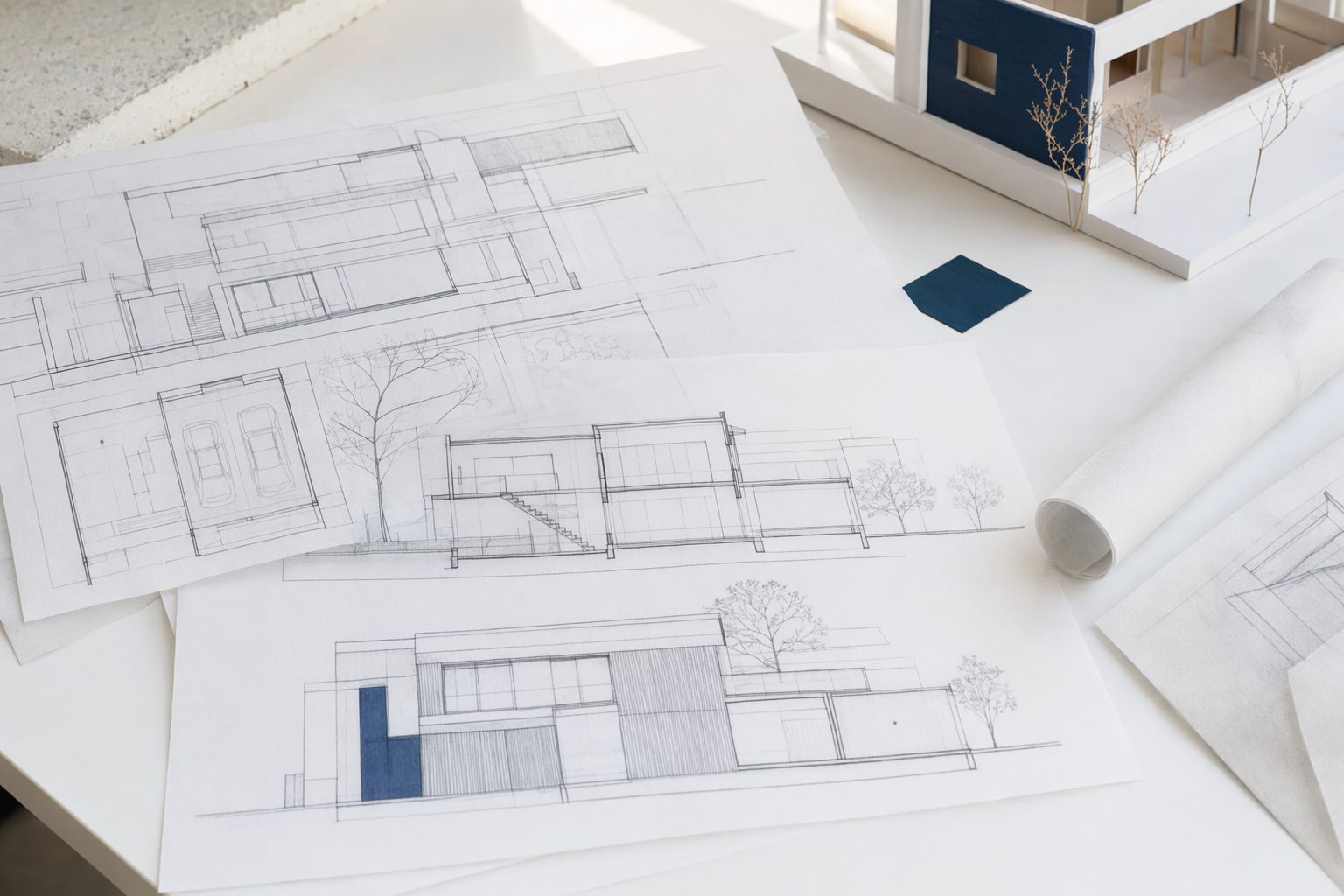
Site plan: the simple definition
A site plan is a bird’s-eye drawing of a property. It usually shows the lot boundaries, the existing buildings, and the new work being proposed.
For a home project, that might include an addition, ADU, garage, deck, or driveway changes. For a business project, it may show the building footprint, parking, accessible routes, loading areas, landscaping, and service access.
Think of it as the map that explains how the project sits on the land. It is not the same as interior floor plans, which show room layout inside the building.

What a site plan usually shows
A good site plan often includes the property lines, street names, north arrow, dimensions, setbacks, easements, and the location of nearby structures. It may also show slopes, drainage direction, trees, fences, sidewalks, utility lines, and finished ground levels.
For permit drawings, the level of detail can vary by city and by project type. Some jurisdictions want a very simple plan. Others want more technical information, especially if the project affects grading, drainage, fire access, parking, or accessibility.
If terms like setback, easement, or FAR are unfamiliar, they just mean rules about where you can build, what rights others may have on the land, and how much building area is allowed. Local rules vary, so the exact requirements depend on your city and state.
Why site plans matter
A site plan helps everyone understand whether a project can physically fit on the property and how it relates to local rules. It is often one of the first drawings reviewed during planning or permit review.
It can also help you catch issues early. For example, you may discover that a proposed addition is too close to a property line, that parking needs to be rearranged, or that an ADU needs a better access path.
A clear site plan can save time later because it gives the architect, contractor, and local reviewers one shared picture of the project. It does not guarantee approval, but it can make the design process more organized.
Who usually prepares it
A licensed architect often prepares the site plan as part of a larger set of drawings, especially when the project includes a custom home, addition, renovation, ADU, or commercial space. In some cases, a surveyor, civil engineer, landscape designer, or design professional may also help.
The right person depends on the project and on local requirements. A simple project may need only a basic plan, while a more complex project may need survey data, grading information, or coordination with other consultants.
Studio Northing is not an architecture firm. We help you find and connect with a licensed architect who can review your project needs and explain what documents may be appropriate in your area.
How to get a site plan for your project
Start with what you already have. A property survey, closing documents, county records, or previous permit drawings may already show part of the information needed.
If you do not have a survey or accurate property information, a licensed architect or another qualified professional may tell you whether you need one before drawings begin. That is especially important when property lines, setbacks, or existing building locations are unclear.
If you are just getting started, you can use our guide library to learn the basics, read about the services we help people understand, or get matched with a licensed architect for your project.
What we help with
We help homeowners and businesses across the US understand the next step and get connected with a licensed architect for their project. That may include a custom home, addition, renovation, ADU, commercial design, or permit-ready drawings.
Our service is free for you. We do not provide architectural, engineering, or legal advice, and we do not promise a permit outcome. We simply help you understand the process and match you with a licensed architect based on your needs.
Before hiring anyone, always verify the architect’s state license and ask what services are included, since rules and scopes of work vary by state and city.
- Site plan = the drawing that shows how a project fits on the property.
- It often shows lot lines, setbacks, existing buildings, parking, and access.
- Local rules vary, so requirements can change from one city to another.
In plain English
A site plan is the map of your property that shows where a project will go, and we help you get matched with a licensed architect who can prepare or review it.
Always hire a licensed architect, and verify the state license yourself before work starts. General information, not architectural, engineering, or legal advice.