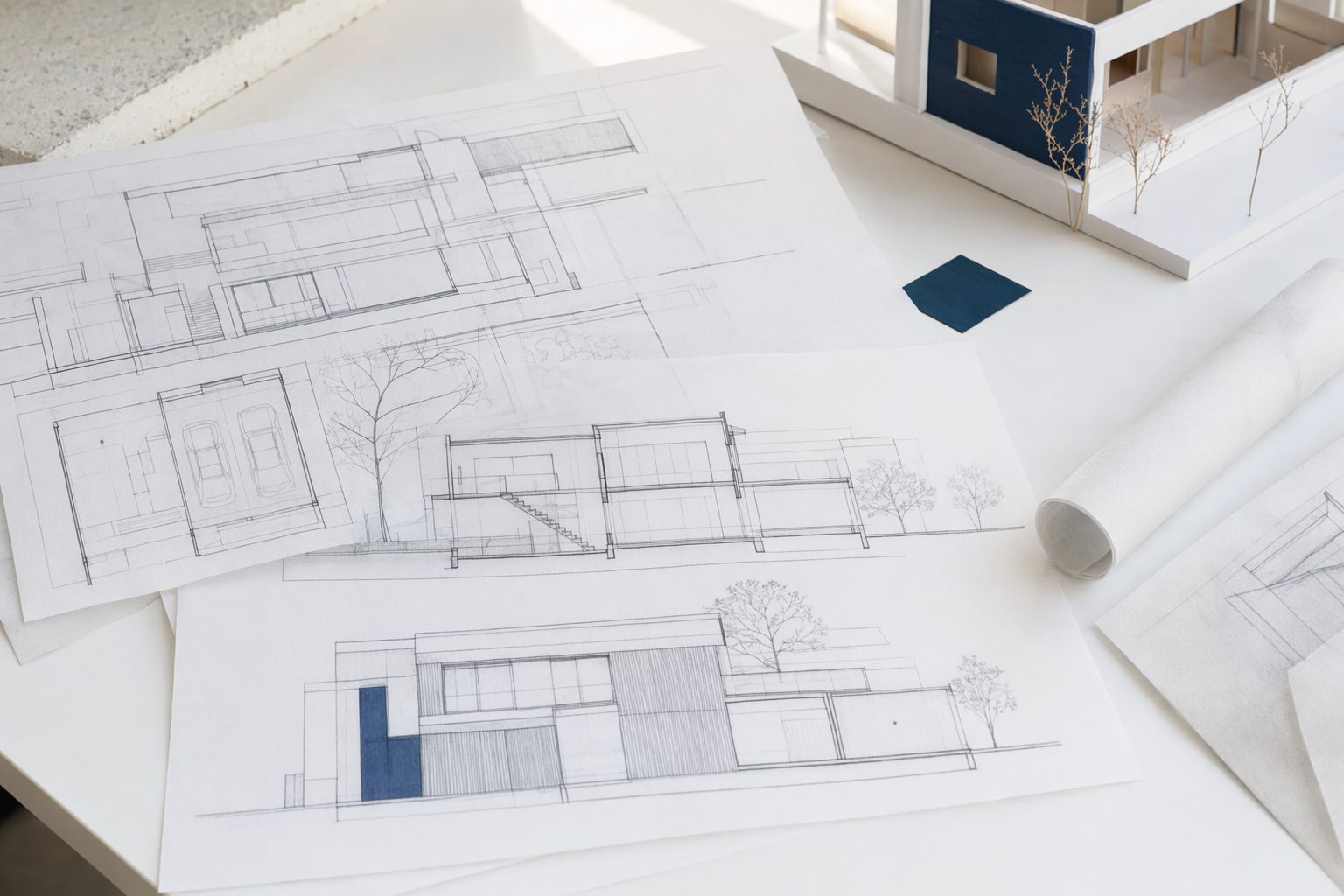
As-built drawings, in plain English
An as-built drawing is a set of drawings that records a building or space as it exists in real life. Think of it as a measured snapshot of the current condition of a house, office, store, or other property.
It is different from the original design drawings. Design drawings show what someone intended to build. As-built drawings show what is there now, including changes made during construction or changes added later.
These drawings often include room sizes, wall locations, doors, windows, ceiling heights, stairs, and major systems. Depending on the project, they may also show structural elements, plumbing, electrical items, or mechanical equipment.
If you are planning work on an existing building, an architect may use as-built drawings as a starting point. That helps them understand the space before they prepare new design or permit-ready drawings.

Why people need them
Many projects start with incomplete information. The old plans may be missing. The building may have been remodeled several times. The county records may not match what is actually on site. That is where as-built drawings become useful.
Homeowners often need them before a major renovation, home addition, attic conversion, basement project, or ADU. Business owners may need them before reworking a retail space, office, restaurant, or small commercial building.
They can help a licensed architect spot basic constraints early, such as unusual room dimensions, low ceiling areas, wall conflicts, or layout issues. They can also help the project team ask better questions about code, structure, and building systems. Rules vary by state and city, so the exact documents needed for permits can differ.
In some cases, as-built drawings are also useful for property records, landlord-tenant planning, maintenance, or future design work. They are not a promise that a building is code-compliant. They are simply a record of what appears to exist.
What is usually included
The content depends on the building and the reason for the drawings. A basic residential set may include a site plan, floor plan, roof plan, and exterior elevations. Interior elevations, reflected ceiling plans, and building sections may be added if needed.
A floor plan is the overhead view of the rooms and walls. An elevation shows one side of the building, like the front or rear. A section is a cut-through view that helps explain height and construction. If you hear the term MEP, that means mechanical, electrical, and plumbing systems.
Some as-built drawings are very simple. Others are highly detailed and include window sizes, door swings, fixture locations, cabinetry, beams, soffits, and equipment. For commercial spaces, drawings may also note accessibility items, exit paths, and existing restroom layouts.
If a project is moving toward design and permit work, the architect may decide what level of detail is worth documenting. More detail usually means more site time, more drafting, and a higher fee.
How they are created
Usually, someone visits the property and measures the space. That may be done with a tape measure, laser measuring tools, photos, and notes. On some projects, a team may use 3D scanning technology to capture the building more quickly and with more detail.
Those field measurements are then turned into digital drawings. The finished drawings may be in PDF or CAD format, depending on the architect's process and what the project needs next.
It is important to understand that as-built drawings are only as accurate as the information collected on site and the scope of the work. Hidden conditions behind walls, above ceilings, or below floors may not be visible. If exact structural or engineering information is needed, additional investigation may be required.
That is one reason it helps to work with a licensed architect who can explain what is included, what is excluded, and what level of accuracy makes sense for your project.
How much they cost and what affects price
There is no single national price because every building is different. Cost usually depends on the size of the property, the complexity of the layout, ceiling height changes, site access, whether the building is occupied, and how much detail is needed.
A small, simple home or suite may cost much less than a large older building with multiple additions and hard-to-measure spaces. If exterior measurements, roof documentation, or detailed MEP information are needed, the fee may increase. Travel time and local market conditions also matter.
Some architects price as-built drawings as a fixed fee for a defined scope. Others use hourly billing, especially when the existing conditions are uncertain. If the as-builts are part of a larger renovation project, they may be bundled into the early project phase.
If you are comparing proposals, ask what is included in the field visit, what drawings you will receive, and whether revisions are included if missing information is discovered later. Our guides can help you understand common terms before you speak with an architect.
- Bigger buildings usually cost more to measure and draft
- Older properties often need more field verification
- More detailed drawings usually mean a higher fee
How to hire the right architect for as-built drawings
If you need as-built drawings, look for a licensed architect with experience in existing buildings, not just new construction. Renovation work requires careful measuring, good judgment about what to document, and a clear understanding of what future design or permit work may require.
Ask whether the architect is licensed in your state, and verify that license with the state board. You can also ask what types of buildings they have measured before, what deliverables they provide, and whether they can continue into the next phase if you later decide to design an addition, renovation, or tenant improvement.
Studio Northing is not an architecture firm, and we do not provide architectural, engineering, or legal advice. We are a free service that helps you understand the process and get matched with a licensed architect for your project.
If you want help getting started, we can match you with a licensed architect. You can also learn more about the kinds of projects architects handle on our services page.
In plain English
As-built drawings show what a building looks like now, and we can help you find a licensed architect to create them for your project.
Always hire a licensed architect, and verify the state license yourself before work starts. General information, not architectural, engineering, or legal advice.