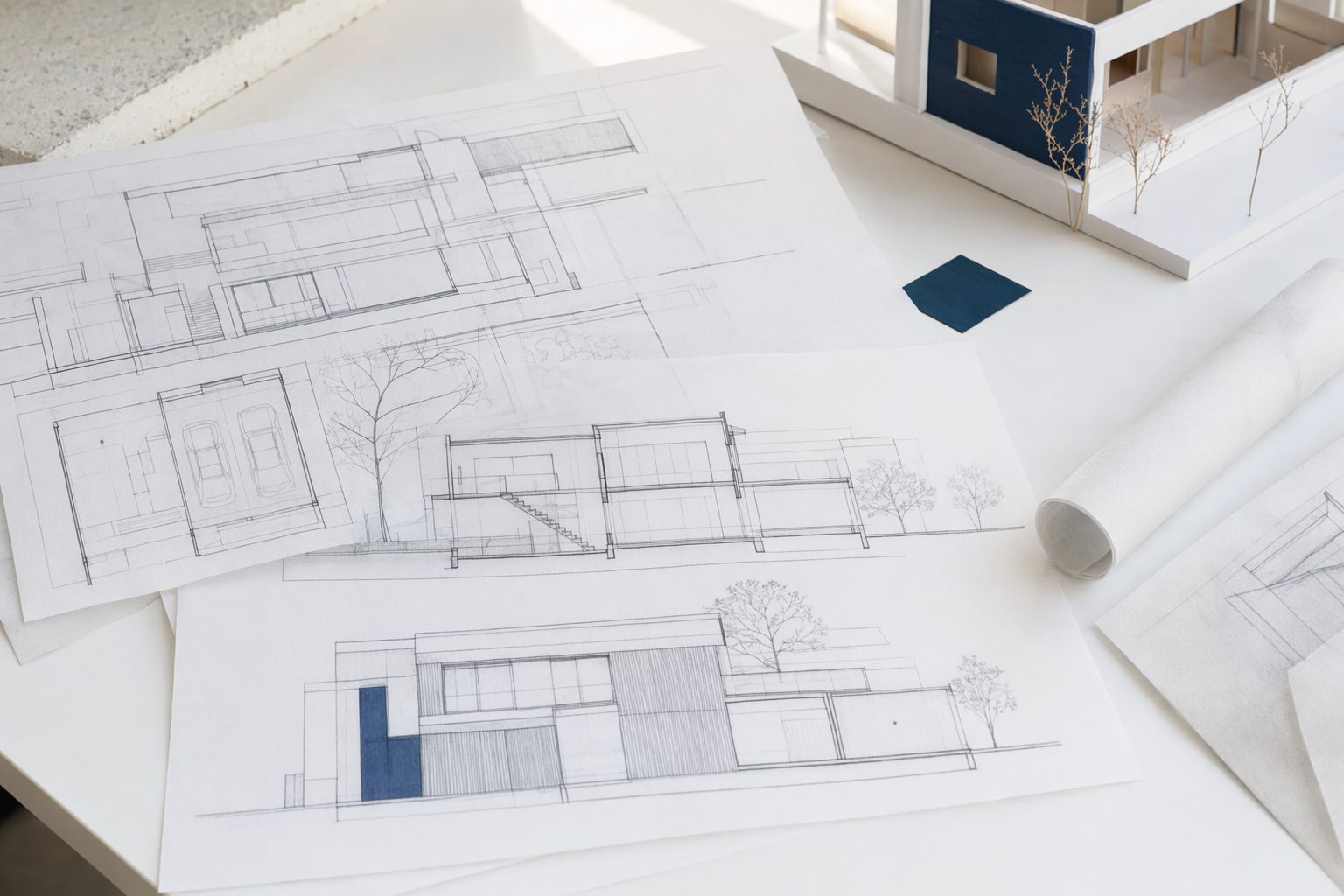
Why elevation drawings matter
Elevation drawings help people make decisions before construction starts. They let you check whether the windows look balanced, whether the roof shape feels right, and whether the addition fits the rest of the home or building.
They also help communicate with others involved in the project. Contractors use them to understand exterior work. Permit reviewers may use them to check height, exterior changes, and zoning-related issues. Neighbors or landlord representatives may also want to see elevations for certain projects.
For homeowners, elevations are often where the project starts to feel real. A floor plan explains function, but an elevation shows character.

Elevation vs. section vs. floor plan
These drawings are often confused, but each one answers a different question. A floor plan shows the layout from above. An elevation shows the outside face of the building. A section is a cut-through view, like slicing the building open to see inside relationships between floors, ceiling heights, roof structure, and stairs.
If you are planning a custom home, addition, renovation, ADU, or commercial space, you will usually need several drawing types working together. Elevations alone do not explain everything. They are one part of a larger design and permit package.
If you are still learning the process, our guides can help you understand common drawing types and what to expect when hiring a licensed architect.
When you may need elevation drawings
You may need elevation drawings for a new home, a second-story addition, an ADU, a porch or facade update, a retail build-out with exterior changes, or a larger renovation that changes the outside of the building.
They are commonly required when the exterior appearance, height, or roof line is changing. In many places, even smaller projects may need elevations if they affect windows, doors, exterior walls, or zoning rules such as setback or height limits. A setback is the required distance between a building and the property line.
Because local rules vary, it is smart to confirm requirements with your city or county and with a licensed architect in your state. Studio Northing is a free educational matching service. We help you find a licensed architect for your project, but we do not provide architectural, engineering, or legal advice.
How architects use elevations during design
Early in a project, elevations may start as simple sketches or basic digital drawings. At this stage, they help explore proportion, window placement, roof forms, and the overall look of the building. This early phase is often called schematic design, which means the concept stage when big-picture ideas are being tested.
Later, elevations become more precise. They may include exact dimensions, material notes, and references to other drawings. As the design develops, the elevations need to stay coordinated with the floor plans, sections, and structural information.
If your project also involves mechanical, electrical, and plumbing systems, you may hear the term MEP. That stands for mechanical, electrical, and plumbing. Those systems are usually shown on separate drawings, but they still need to work with the exterior design shown in the elevations.
If you need help getting started
If you know you need drawings but are not sure what kind, that is a common place to start. Many owners know the goal — more space, a better layout, a permit-ready set of drawings, or a cleaner exterior update — but do not know which documents come first.
Studio Northing is not an architecture firm. We do not prepare drawings ourselves. We help you find and get matched with a licensed architect who can review your project, explain what drawings may be needed, and discuss next steps based on your location and scope.
You can learn more about common project types on our services page, or use our free get matched form if you want help connecting with a licensed architect.
In plain English
An elevation drawing shows what one outside side of a building looks like, and we can help you find a licensed architect if you need one.
Always hire a licensed architect, and verify the state license yourself before work starts. General information, not architectural, engineering, or legal advice.