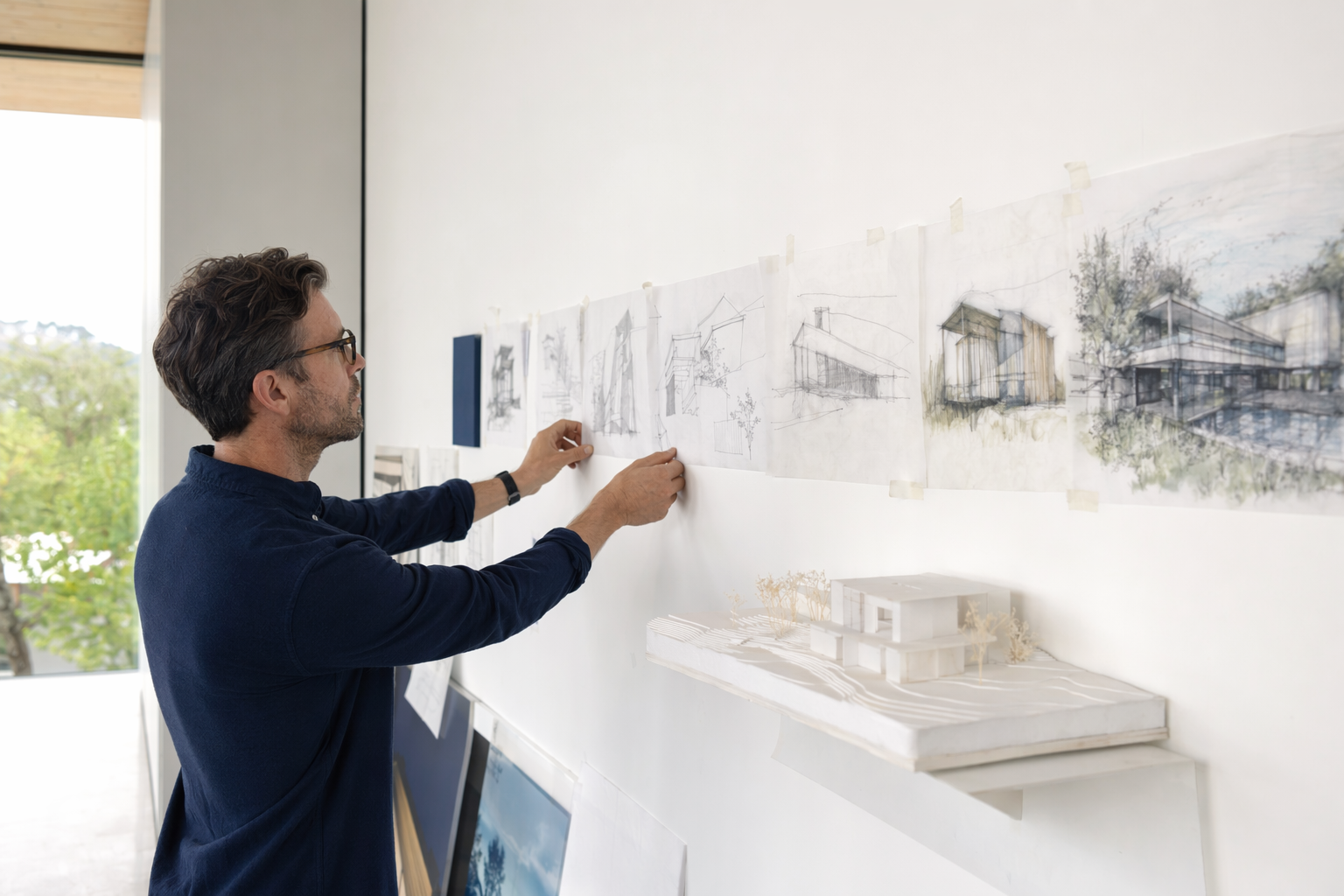
Design development, in plain English
Design development is the middle phase of architectural design. It usually comes after schematic design, where the architect explores the big ideas, and before construction documents, where the full permit and bidding drawings are prepared.
In design development, the project starts to become more specific. Room sizes are refined. Exterior and interior materials are discussed. Important building systems like structure, heating and cooling, plumbing, and electrical are coordinated so the design works in real life, not just on paper.
For a homeowner, this is often the stage where a rough idea starts to feel real. For a business owner, it is where the plan becomes detailed enough to compare options, spot conflicts, and make informed decisions before spending more on final drawings.

What usually happens during this phase
The exact scope depends on the project, the architect, and local rules, which vary by state and city. But design development often includes updated floor plans, exterior views, building sections, and key dimensions. The architect may also begin showing typical wall types, window concepts, roof shapes, and major finish directions.
This is also the stage where consultants may start coordinating more closely. You may hear the term MEP, which means mechanical, electrical, and plumbing. In simple terms, that covers heating and cooling equipment, power and lighting, and water and drain lines. Structural input may also become more detailed so beams, columns, and spans make sense with the layout.
The architect may review code-related items at a higher level too. That can include setbacks, which are the required distances between the building and property lines, height limits, parking, accessibility, and general zoning fit. This is not a promise of approval. It is part of reducing surprises before the permit set is prepared.
Why design development matters
This phase is where many expensive changes can still be avoided. Moving a wall, adjusting a stair, changing a roof line, or rethinking window sizes is usually easier during design development than after permit drawings are finished or construction has started.
It also helps the team test whether the project still matches the budget and goals. A beautiful concept can become difficult if the structure is too complex, the mechanical system needs more space, or material choices push costs too high. Design development gives you a checkpoint before the final technical work begins.
For many owners, this phase improves confidence. You can ask better questions because the project is no longer just a sketch. You can compare options more clearly and decide what matters most: size, look, efficiency, timeline, flexibility, or cost.
What deliverables you might receive
Every architect works a little differently, so ask what is included. A typical design development package may include revised plans, exterior elevations, one or more building sections, preliminary door and window decisions, outline specifications for materials, and coordination with structural and MEP consultants as needed.
You may also receive updated 3D views or renderings, though not every project includes them. Some architects provide a more developed finish direction for kitchens, bathrooms, flooring, or exterior cladding. Commercial projects may include more information about occupancy, circulation, and code-related layout decisions.
This package is usually detailed enough to support a more informed cost conversation. It is not always the same as a permit set. Permit-ready drawings typically come later, after design development is approved and the team moves into construction documents.
Questions to ask your architect
If you are hiring an architect, design development is a good time to be clear about process and expectations. Ask what decisions need to be made now, what can wait, and what information you will receive at the end of the phase. Ask how they coordinate with structural and MEP consultants, and whether cost feedback is expected during this stage.
It is also smart to ask how local zoning and code issues are being checked. For example, if your site has a setback issue, lot coverage limit, or floor area ratio, often called FAR, you want to know early. FAR is a rule that limits how much total floor area can be built on a property compared with the lot size.
Finally, ask how changes are handled. If you request major revisions after design development is complete, that may affect fee and schedule. Clear communication here can help avoid frustration later.
If you are still looking for the right professional, Studio Northing is a free service that helps you find and get matched with a licensed architect for your project. You can learn more about common project types on our services, browse practical articles in our guides, or get matched when you are ready.
How this phase fits into the bigger project timeline
A simple way to think about the full process is: early ideas, then design development, then final technical drawings. The first phase explores direction. Design development tests and refines it. The next phase turns it into a coordinated drawing set for permitting, pricing, or construction.
Not every project follows the exact same steps. A small renovation may move quickly. A custom home, ADU, or commercial space may need more coordination and more rounds of review. Some cities also require planning or zoning review before a permit application can move forward.
Because each project is different, it helps to work with a licensed architect who understands the state and local context. Studio Northing does not provide architectural, engineering, or legal advice, but we do help connect homeowners and businesses with licensed architects across the US. Always verify an architect's state license and ask how they approach your type of project.
In plain English
Design development is the phase where an architect turns an early idea into a more detailed, coordinated plan before final permit or construction drawings.
Always hire a licensed architect, and verify the state license yourself before work starts. General information, not architectural, engineering, or legal advice.