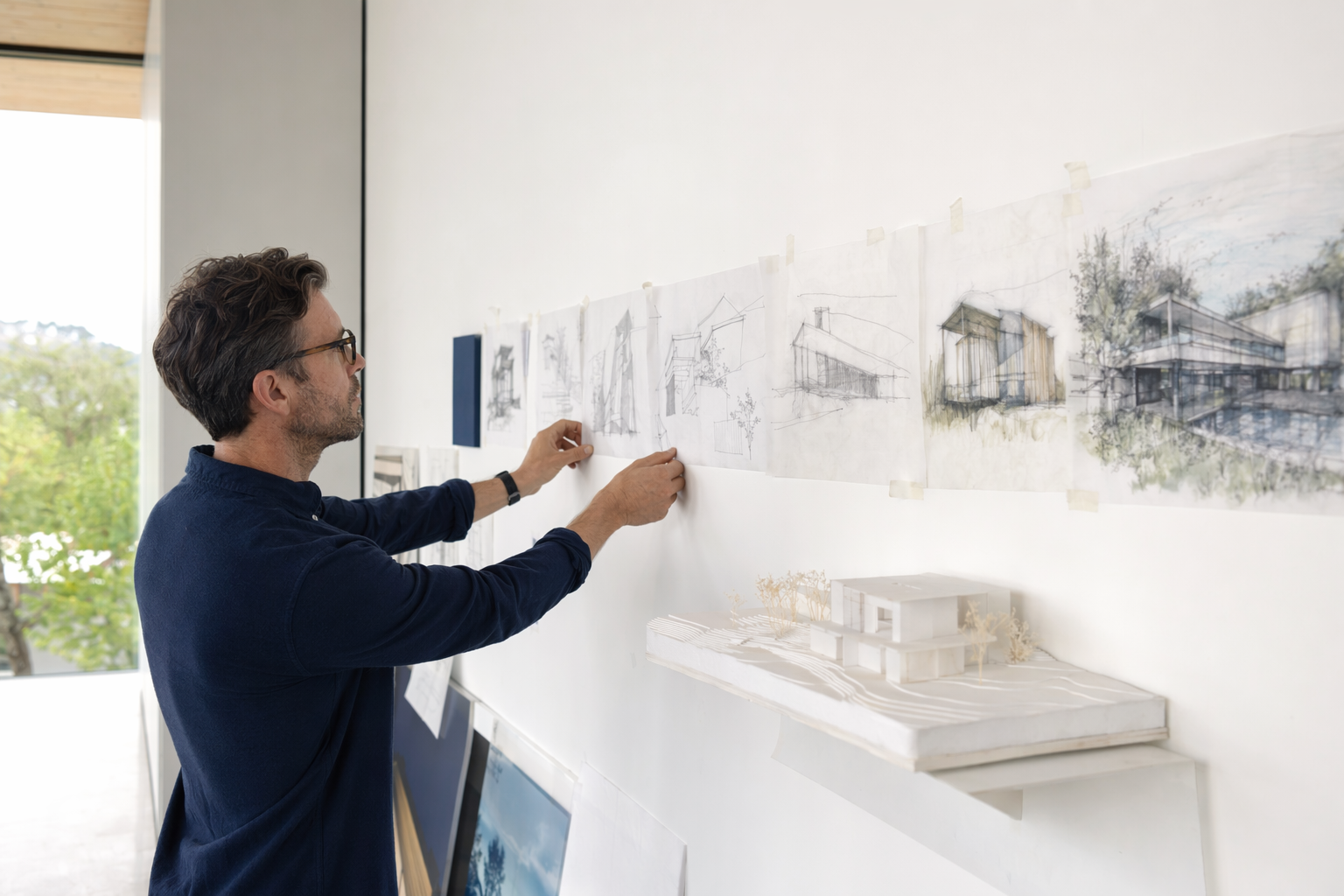
Schematic design in plain language
Schematic design is the first “real” design phase for many building projects. After you share your goals and constraints, an architect develops a concept that addresses how the space will work.
Think of it as a roadmap: it helps you and the architect agree on the overall layout, the building form, and the basic direction before moving into more detailed drawings.
Studio Northing helps you understand the process and we help you find a licensed architect for your project. We don’t design or stamp plans ourselves.

What’s usually included in schematic design
While each architect’s process can differ, schematic design commonly includes:
• A concept layout (for example, room arrangement, major circulation paths, and how people move through the building)
• Early massing and form ideas (the general building shape and orientation)
• Site planning at a high level (like rough building placement, access, and basic relationship to parking or property lines)
• Preliminary design intent for code issues (for example, broad notes on life safety, accessibility pathways, or fire separation concepts—without guaranteeing permit approval)
You may also see early options. For example, the architect might offer two layout choices so you can compare tradeoffs.
Why schematic design matters for permits and construction
Schematic design helps reduce uncertainty. You’re not yet looking at fully detailed drawings, but you’re getting enough clarity to make key decisions.
It also helps streamline later phases. More detailed design usually depends on what you choose during schematic design. If your goals change later, it can cause rework.
Important: schematic design is often not the final permit set. Permit-ready drawings usually come later, after you move through additional design and documentation steps with your architect.
Who does what during this phase?
Your role is to share priorities and constraints. That can include budget range, style preferences, accessibility needs, timeline goals, and must-have features.
The architect’s role is to translate those priorities into a coherent concept and to guide you through decisions. In practice, this phase can involve coordination with other professionals depending on your project, such as civil/site needs or building systems review.
If you’re new to the process, it can help to ask your architect: “What decisions do I need to make during schematic design, and what will I receive at the end of this phase?”
How fees and timelines connect to schematic design
Fees are often structured by project phases. Schematic design is one of the early milestones, and the cost for that portion depends on project size, complexity, and local requirements.
Typical architect fee structures may include a flat fee by phase or a percentage-based approach. If your architect quotes fees as a percentage of construction cost, the total range can vary widely by region and scope. Always ask what the percentage covers and what’s excluded.
For next steps and planning, you can review our services and learn how matching works at get matched.
Questions to ask your architect (before you start schematic design)
Here are practical questions that help you understand what you’ll get and what “done” means for this phase:
• What deliverables do you provide at the end of schematic design? (Plans, concept drawings, 3D views, a written design summary?)
• Will you include a preliminary estimate, and how detailed is it?
• How do you handle changes if I want to adjust the layout, materials, or size?
• What information do you need from me to start, and when?
• What’s the typical path from schematic design to the next drawing set for permits?
Also verify the architect’s state license in your city/state and confirm any local requirements for drawings and permitting.
In plain English
Schematic design is the early design concept phase where a licensed architect turns your goals into a clear layout and building direction—helping you plan decisions before permit-ready drawings.
Always hire a licensed architect, and verify the state license yourself before work starts. General information, not architectural, engineering, or legal advice.