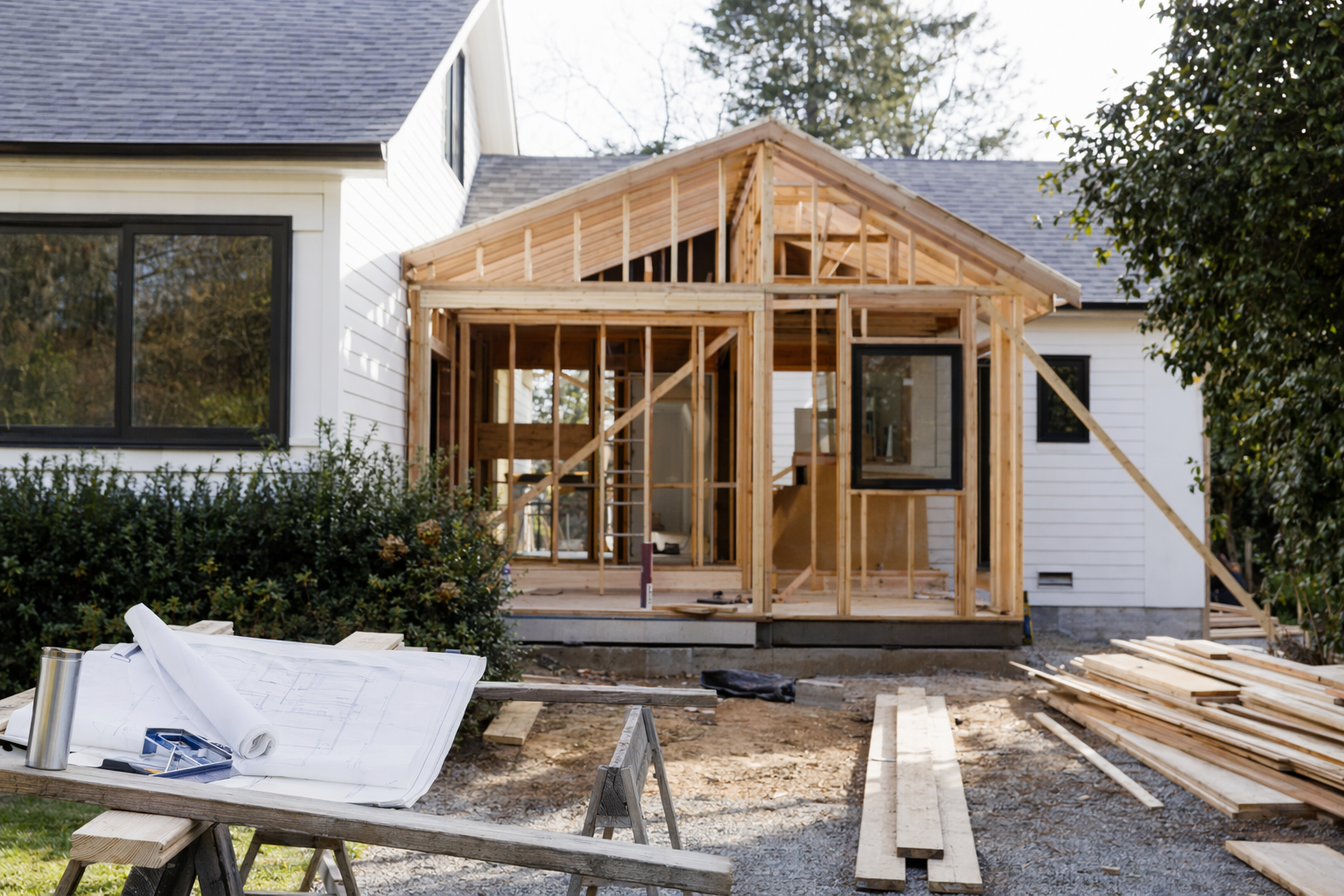
The starting point
A homeowner and their spouse came to us with a common problem: they knew their house felt too small, but they did not know whether to remodel the kitchen, add a room, or do both at once. Their budget was limited, and they wanted to avoid paying for drawings before they understood what was possible.
They were also new to the process in the US. Terms like schematic design, permit drawings, and zoning were unfamiliar. We explained the basics in plain language and helped them get matched with a licensed architect who could review the project scope and local rules.
Because rules vary by state and city, the first goal was not to promise an outcome. It was to help them understand the likely path, the key constraints, and where to spend money carefully.

What they needed to sort out first
The architect started by asking practical questions: How much space did they really need? Which walls might be structural? Could the addition fit the lot setbacks? Would the kitchen layout need plumbing or electrical changes?
This early review helped the couple separate wish list items from must-haves. A bigger island sounded nice, but it would have pushed the project beyond budget. Instead, the plan focused on a smarter kitchen layout, better storage, and a modest addition that added the most useful square footage.
That kind of early filtering is one reason people often seek a licensed architect before they commit to contractors or final plans. It can help them avoid redesign later, when changes are usually more expensive.
How the budget stayed under control
The couple set one clear rule: design decisions had to support the budget, not fight it. The architect shaped the layout around a simpler structure, fewer complicated roof changes, and a compact footprint. That reduced the amount of work needed in the field.
They also phased the discussion. First came the overall concept. Then came the permit-ready drawings. Only after the plan was more defined did they compare construction proposals. This sequence gave them a better basis for decision-making than jumping straight into pricing a vague idea.
We often remind people that architectural fees are usually a small percentage of construction cost for many residential projects, but the exact range varies by scope, location, and complexity. No one can guarantee a final number, and no one can guarantee permit approval. The goal is to make the process clearer and more manageable.
Why the couple wanted help early
The homeowners told us they had almost started by asking a builder for a rough sketch. Instead, they chose to understand the project first. That made it easier to talk about realistic scope, identify likely code issues, and avoid a design that looked good on paper but was awkward to build.
Early help also made communication easier. The architect explained design terms in plain English and helped the couple prepare better questions for their contractor. For people who are new to the US building process, that kind of translation can be especially valuable.
If you are beginning a similar project, our services page explains how we help people understand the process, and our projects page shows other project types we can help connect you with.
What this example shows
A careful budget does not mean a tiny idea. It means choosing the parts of the project that matter most and organizing them in the right order. For this couple, that meant clarifying the scope early, keeping the design efficient, and matching with a licensed architect who could help them move forward responsibly.
Studio Northing is not an architecture firm. We do not design or stamp drawings ourselves, and we do not give legal or engineering advice. We provide free educational guidance and help you find a licensed architect who fits your project.
If you are starting to plan a kitchen remodel, addition, ADU, or other project, our guides can help you learn the basics before you begin.
In plain English
This couple used early planning and a free match with a licensed architect to keep a kitchen-and-addition project organized and budget-aware, without getting any promises about cost or permits.
Always hire a licensed architect, and verify the state license yourself before work starts. General information, not architectural, engineering, or legal advice.