The short answer
There is no single national timeline for building permits in the US. Each city or county has its own review process, staffing, backlog, and rules. A small interior update may move much faster than a new home, addition, ADU, or commercial project.
As a general educational range, a straightforward permit review might take about 2 to 8 weeks in some jurisdictions. A more involved residential project often takes 2 to 6 months. Projects with zoning issues, historic review, environmental review, or multiple agency approvals can take longer.
The biggest reason timelines stretch is not always the city itself. Delays often come from incomplete plans, corrections requested by reviewers, missing consultant information, or changes made by the owner after submission.

What affects permit timing most
Project scope matters first. Cosmetic work may not need the same level of review as structural changes, additions, new buildings, tenant improvements, or projects that change use or occupancy. Commercial work often involves more review because life safety, accessibility, and mechanical systems can be more complex.
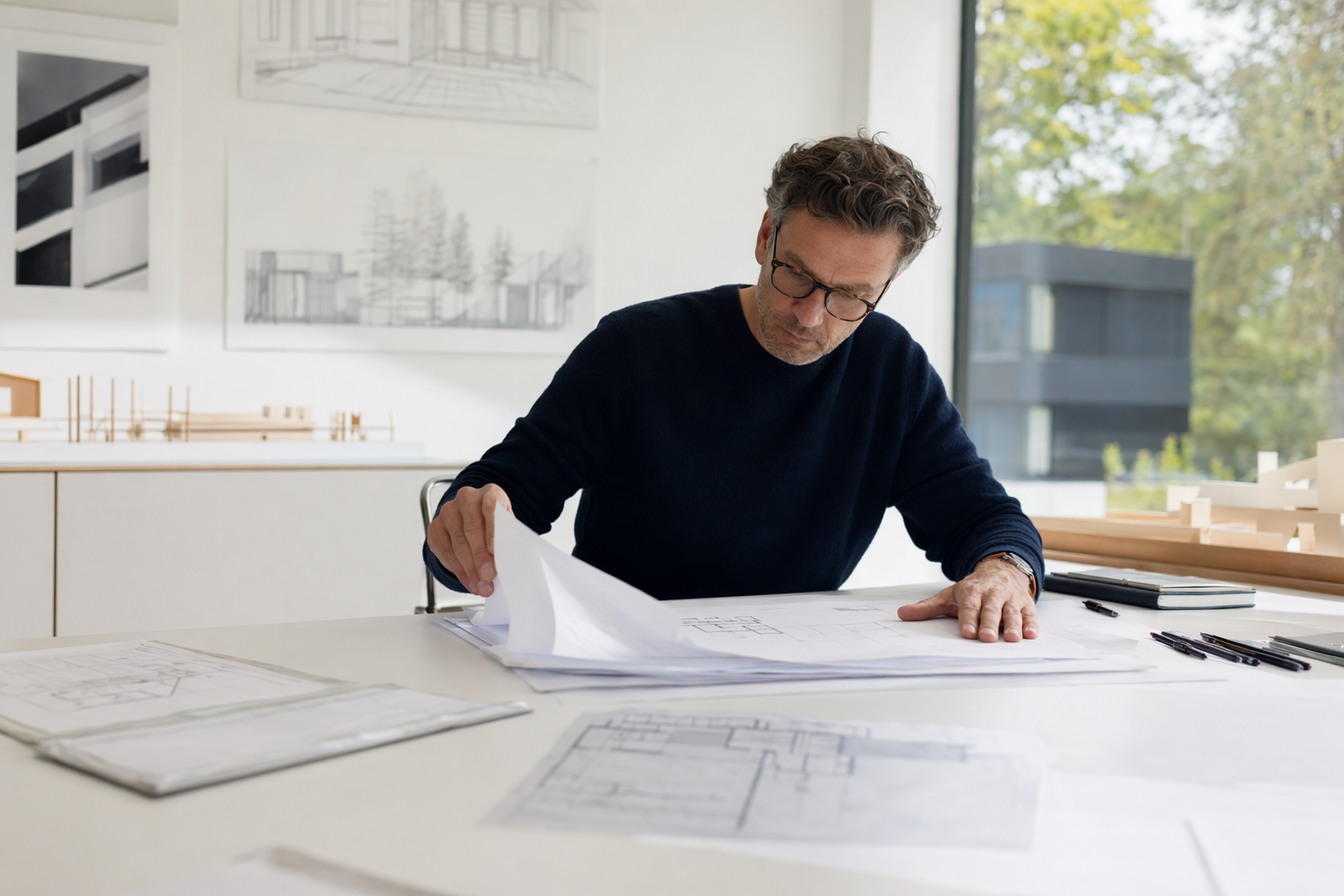
The quality of the permit set also matters. Permit-ready drawings are the plans submitted to the city for review. If the drawings clearly show dimensions, code information, structural intent, and system coordination, reviewers can usually respond more efficiently. If key items are missing, the city may issue comments and pause the review until revised plans are resubmitted.
Local requirements can add time too. Some projects need zoning review before building plan check. Others may require structural, civil, energy, fire, health department, utility, flood zone, or historic approvals. In some places, those reviews happen together. In others, they happen one after another.
A typical permit timeline, step by step
Before the permit application, there is usually a design and documentation phase. That can take a few weeks for a small project or several months for a larger one. Your architect may begin with schematic design, which means early layouts and concepts, then develop the drawings needed for pricing, coordination, and permit submission.
After submission, the city usually performs an intake check to confirm the application is complete. Then reviewers examine the plans for zoning, building code, life safety, and sometimes structural, energy, plumbing, mechanical, and electrical items. MEP stands for mechanical, electrical, and plumbing.
Most projects receive comments at least once. Your architect and consultants respond with revisions, then the plans go back for another review cycle. Once comments are resolved and fees are paid, the permit may be issued. Depending on the jurisdiction, that final step can be quick or can take additional time.
This is one reason it helps to hire a licensed architect who has experience with your project type and understands local review patterns. If you want help, we match you with licensed architects for your project. Studio Northing is a free matching service, not an architecture firm.
Common reasons permits get delayed
Zoning issues are a major cause of delay. Zoning rules cover things like setbacks, height, lot coverage, parking, and use. A setback is the required distance between the building and the property line. If the design does not fit those rules, you may need revisions or a separate approval process.
Structural changes can also slow the process. Removing walls, adding square footage, changing roof framing, or building in earthquake, wind, or flood-prone areas often requires more coordination. If a project needs engineering, permit review may depend on that information being complete and consistent across the full plan set.
Other common delays include owner-requested changes after submission, unclear property records, unpermitted existing work, missing energy documents, and slow responses from consultants. In busy cities, backlog alone can add weeks.
If you are early in planning, our services page explains the kinds of projects architects help with, and our guides page covers related topics in plain English.
How to improve the odds of a faster review
Start by confirming what your city actually requires for your project type. Rules vary by state and city, and even nearby towns may handle the same kind of project differently. Check whether you need zoning review first, whether engineering will be required, and whether there are neighborhood, coastal, floodplain, or historic overlays.
Choose a licensed architect who regularly works on similar projects. Experience does not eliminate permit comments, but it can help reduce avoidable issues in the submission. It also helps to decide your scope early and avoid major plan changes after the permit package is submitted.
Gather basic property information before design moves too far. That may include a survey, existing drawings if available, photos, utility information, and any prior permit history. If your lot has unusual conditions, such as a steep slope or easements, raise that early.
We cannot provide architectural, engineering, or legal advice, but we can help you find a licensed architect for your project. Our matching service is free to use, and you can verify the architect's state license before moving forward.
What homeowners and businesses should expect
It is smart to treat permit timing as a range, not a fixed date. If your project has a contractor, financing deadlines, a lease start, or a move-in goal, build in buffer time. Even well-prepared projects can face review comments or agency backlog.
A good architect can often help you understand the likely path, the possible risks, and what information is needed before submission. They cannot control the city's schedule, and no one should promise approval by a certain date.
If you are not sure where to start, get matched with a licensed architect through Studio Northing. We help homeowners and businesses across the US find architects for custom homes, renovations, additions, ADUs, commercial work, and permit-ready drawings.
In plain English
A building permit can take weeks or months, and the best way to avoid delays is a complete, well-coordinated submission from a licensed architect familiar with your type of project.
Always hire a licensed architect, and verify the state license yourself before work starts. General information, not architectural, engineering, or legal advice.